
High-discharge, semi-solid state, and self-heating lithium battery packs optimized for Eastern European sub-zero environmental conditions.


Operating lithium-ion storage solutions in Romania and the broader Central and Eastern European (CEE) zone introduces severe physical challenges. Winter conditions in region hubs such as Cluj-Napoca, Brașov, and along the Carpathian mountain corridors frequently drop well below -20°C, reaching extreme dips of -35°C during continental polar air mass events. Standard Commercial Lithium Nickel Manganese Cobalt Oxide (NMC) and Lithium Iron Phosphate (LiFePO4) chemistries encounter dramatic degradation at sub-zero thresholds: high internal charge transfer resistance, severe electrolyte viscosity increase, sluggish lithium-ion diffusion within graphite anodes, and dangerous metallic lithium dendrite plating during charging cycles.
At temperatures below 0°C, standard organic liquid electrolytes (such as LiPF6 in EC/DMC) experience exponential ionic conductivity drop—falling from ~10-12 mS/cm at 25°C down to less than 1 mS/cm at -30°C. Concurrently, the solid-electrolyte interphase (SEI) resistance increases up to 10-fold, causing drastic voltage sag under load and risking irreversible cell capacity degradation if standard charging algorithms are executed.
As a leading Chinese OEM manufacturer with over 15 years of dedicated battery research and advanced UK-certified engineering standards (ISO9001:2015 process controls), our custom low-temperature battery architectures directly resolve these electrochemical constraints. By integrating functionalized low-viscosity carboxylate co-solvents, lithium bis(fluorosulfonyl)imide (LiFSI) salt formulations, thin-film PTC self-heating element arrays, and semi-solid state gel matrix membranes, our battery packs retain up to 88% nominal capacity at -20°C and remain fully operational down to -40°C.
Romania represents one of Eastern Europe's fastest-growing logistics, automotive manufacturing, and renewable energy hubs. Our low-temperature battery solutions are engineered to support the nation's critical infrastructure across five core domains:
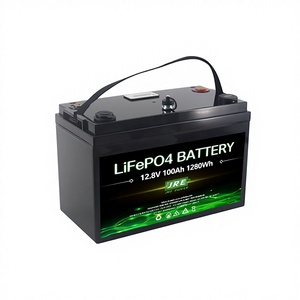
Off-grid cellular base stations (BTS) and remote environmental telemetry units situated on high-altitude radar nodes in the Southern Carpathians require zero-maintenance deep cycle power. Our 12V and 24V self-heating LiFePO4 packs ensure uninterruptible 24/7 power backup despite heavy snowpack accumulation and ambient drops to -30°C.
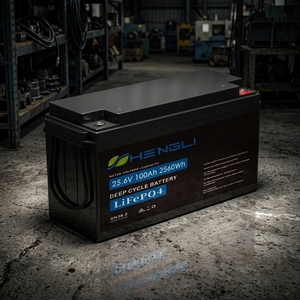
Major European logistics hubs around Bucharest (ILFOVs), Timișoara, and Arad rely on Automated Guided Vehicles (AGVs) operating continuously inside deep-freeze fulfillment warehouses (-25°C). Our semi-solid 25.6V high-density batteries eliminate battery swap downtime, allowing rapid internal self-heating charging without removing units from cold zones.
Romania’s Dobrogea wind corridor experiences severe sub-zero coastal gusts in winter. Our containerized high-voltage (HV) battery management systems incorporate localized thermal insulation and active heating matrices to buffer renewable power export spikes to the Transelectrica national grid during winter freeze periods.
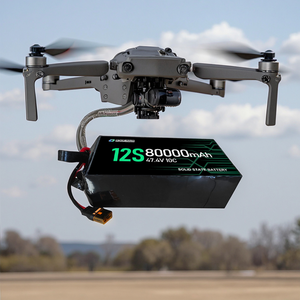
Romania’s strategic position guarding EU outer borders necessitates high-altitude thermal surveillance drones and tactical mobile sensors. Our 10C-20C semi-solid high-rate pouch packs provide extreme pulse power and sustained energy density (>275 Wh/kg) in sub-zero upper atmosphere operation.
To quantify the information gain for Romanian procurement engineers, the comparative matrix below outlines key performance metrics between conventional lithium-ion batteries and our specialized low-temperature battery architectures under -30°C conditions:
| Performance Metric | Standard Li-ion (NMC/LFP) | Our Low-Temp Semi-Solid Pack | Engineering Advantage |
|---|---|---|---|
| Discharge Capacity Retention @ -30°C | 20% - 35% (Severe Voltage Drop) | 82% - 88% Retention | +150% Extended Runtime under freezing loads |
| Charging Temperature Floor | Must be > 0°C (Plating Risk) | Safe Charging down to -30°C | PTC Self-Heating pre-charges cell matrix automatically |
| Internal Impedance Growth (-20°C) | > 800% Increase | < 140% Increase | Custom LiFSI electrolyte formulation suppresses SEI resistance |
| Sub-Zero Cycle Longevity | < 300 Cycles before 30% degradation | 4,000 to 6,000 Cycles | Advanced thermal management preserves cathode structure |
| BMS Communication Protocol | Basic Analog / PWM output | Dual CANbus 2.0B / Modbus RS485 | Seamless integration with European Inverters & AGV Controllers |
The Romanian energy sector is undergoing rapid modernization driven by the EU Green Deal, REPowerEU funding, and national PNRR (National Recovery and Resilience Plan) frameworks. Key trends impacting B2B battery procurement include:
As an direct China-based manufacturer with established export channels serving Central & Eastern Europe, we provide Romanian engineering teams with a robust set of factory capabilities:
Unlike off-the-shelf pack assemblers, we maintain full in-house BMS hardware design and software engineering. Our configurable BMS platform allows precise programming of over-current parameters, thermal cutoffs, SOC algorithms, and cell balancing thresholds via our intuitive software tools.
Every low-temperature pack design undergoes rigorous environmental chamber profiling (-50°C to +85°C), thermal shock testing, vibration testing (UN38.3 T1-T8), and high-current short-circuit simulation before bulk production approval.
Eliminate intermediary trading margins. We provide OEM direct factory pricing, flexible Minimum Order Quantities (MOQ) for custom prototype development, and reliable logistics routes via sea, rail (Eurasian Land Bridge), and air freight direct to Constanța Port or Bucharest airports.
Technical, logistical, and compliance insights tailored for importing custom low-temperature battery packs into Romania.
Our packs feature intelligent BMS-controlled PTC self-heating element arrays. When a charger is connected in sub-zero environments (e.g., -20°C), the BMS directs incoming power strictly to internal heating elements until cell temperatures safely reach +5°C. Once optimal thermal conditions are achieved, the BMS seamlessly switches power to charge the battery cells, preventing dangerous lithium dendrite formation.
All battery packs exported to Romania carry comprehensive EU compliance documentation, including CE Declaration of Conformity, RoHS Compliance certificates, MSDS (Material Safety Data Sheets), and UN38.3 Transport Testing Certification (inclusive of altitude, thermal, vibration, shock, external short circuit, impact, overcharge, and forced discharge tests).
Yes. Our engineering team customizes BMS firmware to match your exact communication protocol requirements—including CANbus 2.0B, CANopen, J1939, RS485 Modbus, and SMBus. We work directly with your software engineers to map custom DBC files and telemetry registers.
For custom mechanical enclosure and BMS development, prototype validation typically takes 3 to 4 weeks. Once sample testing is approved, bulk production takes approximately 15 to 25 days depending on pack capacity. Express air shipping to Bucharest takes 5-7 business days, while DDP sea/rail freight takes 28-35 days.
Semi-solid state batteries utilize a polymer gel matrix electrolyte with significantly lower free liquid content. This prevents electrolyte freezing, reduces thermal runaway risks, provides higher volumetric energy density, and exhibits less than half the internal resistance increase at -30°C compared to conventional flooded liquid cells.
Yes. We provide up to a 5-year warranty on our self-heating LiFePO4 series and dedicated direct technical support. Our technical team is available for real-time remote engineering assistance, BMS configuration tuning, and onsite operational troubleshooting.
Consult directly with our senior electrochemical engineers today. We provide full customization, rapid prototyping, and factory-direct pricing for your project in Romania.