
Engineered to meet stringent European ETSI EN 300 019 and IEC 61439 standards for continuous mission-critical 48V DC power backup.


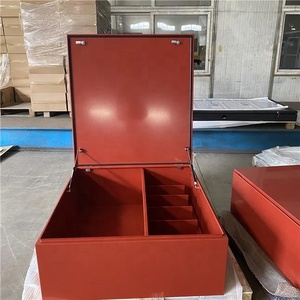

Decarbonization, 5G Densification, and Grid Stabilization in the Île-de-France Digital Infrastructure Network
As the metropolitan region of Paris advances its digital transformation—driven by high-density 5G rollouts, smart city IoT expansions across the Grand Paris Express transport network, and strictly enforced carbon neutral initiatives—telecom network operators (such as Orange, SFR, Bouygues Telecom, and Free Mobile) face unprecedented energy efficiency and backup power reliability challenges. Telecom base transceiver stations (BTS), edge data micro-shelters, and central exchange offices demand continuous 48V DC power systems that can operate reliably under shifting climate profiles, tight urban space constraints, and rigorous European environmental directives.
In Paris, where urban space commands a premium and historical architectural codes limit outdoor equipment footprints, modern Telecom Power Cabinet Battery Systems must combine maximum power density with quiet, efficient thermal dissipation. Legacy valve-regulated lead-acid (VRLA) battery racks are rapidly being phased out across French communications nodes in favor of high-performance Lithium Iron Phosphate (LiFePO4/LFP) battery systems paired with intelligent power conversion rectifiers (supporting >96% electrical conversion efficiency).
Furthermore, the European Union's updated Battery Regulation (EU 2023/1542) and France's strict energy consumption protocols require telecom equipment procurement managers in Paris to mandate full lifecycle traceability, high thermal runaway safety margins, and real-time remote telemetry via standard Modbus, CANbus, or SNMP v3 protocols. As a leading specialized manufacturer supplying the Paris market, our engineering design focuses specifically on overcoming urban environmental heat retention, active power factor correction (PFC), and seamless integration with renewable solar-hybrid microgrids.
Dissecting the critical modules inside custom outdoor shelters and indoor battery racks engineered for peak operational resilience.
Utilizing high-grade Lithium Iron Phosphate cells paired with proprietary proprietary Battery Management Systems. Features active cell balancing, precise State-of-Charge (SoC) estimation, thermal runaway prevention, and wide-range operating voltage stability under heavy load surges.
Incorporating modular hot-swappable rectifiers (such as Vertiv Netsure series or custom 50A SCR chargers) with Active Power Factor Correction (PFC > 0.99). Ensures compliance with low harmonic distortion (THD < 5%) required by French electrical utilities like Enedis.
Equipped with intelligent 48V DC variable-frequency air conditioning units (1000W to 3000W cooling capacity) or dual-circuit heat exchangers. Maintains internal cabinet temperatures below 25°C even when ambient European heatwaves reach 42°C.
Constructed from galvanized steel or marine-grade aluminum with polyurethane double-wall insulation. Finished with epoxy-polyester powder coating engineered to withstand urban atmospheric pollution, humidity, and seismic vibrations (EN 60068-2).
Comprehensive remote monitoring cards supporting RS485, RS232, CANbus, and Ethernet (SNMP/HTTP). Allows network operations centers (NOC) in Paris to remotely run battery health verification, track ambient humidity, and monitor door intrusion sensors.
Flexible interior layout accommodating standard 19-inch battery modules (e.g., 51.2V 100Ah LFP packs), distribution breaker panels, and surge protection devices (SPD Class II), enabling seamless capacity expansion from 10kWh up to 100kWh+.
Comparative baseline engineering parameters for standard, mini shelter, and high-capacity battery enclosure configurations.
| System Parameter | 42U Mini Shelter Cabinet | 48V Aircon Outdoor Enclosure | Mobile Data Room Battery Rack |
|---|---|---|---|
| DC System Voltage | 48V DC (Nominal 51.2V) | 48V DC (Nominal 51.2V) | 48V / 192V / 384V DC Options |
| Battery Chemistry | LiFePO4 (Lithium Iron Phosphate) | LiFePO4 or High-Rate NMC | LiFePO4 Modular Rack Packs |
| Max Current Capacity | 1000A - 2000A DC Busbar | 200A - 600A Rectifier Output | 300A - 1000A DC Main Disconnect |
| Thermal Control System | 2000W 48V DC Compressor HVAC | 1000W-1500W HVAC / Heat Exchanger | Forced Air Cooling / Internal Fan Array |
| Ingress Protection | IP65 / NEMA 4X | IP55 / IP65 Waterproof | IP20 / IP31 (Indoor Data Center) |
| Grid Connection (AC) | 3-Phase 400V AC / 480V PFC | Single Phase 230V AC or 3-Phase | Direct Bus Connection to Central UPS |
| Safety & Certifications | IEC 61439, CE, ETSI EN 300 019 | CE, EN 62368-1, RoHS, UN38.3 | UL 1973, IEC 62619, CE |
Custom power backup solutions tailored for complex urban, underground, and transportation telematics projects.
Deploying lightweight, low-noise outdoor cabinet systems on historical Paris rooftop locations. Thermally isolated 42U mini shelters protect high-drain Active Antenna Units (AAU) and baseband processing equipment against extreme direct summer sunlight exposure.
Vibration-resistant, IP65-sealed backup battery enclosures engineered for underground metro tunnels and rail telematics switches across the Île-de-France transport network. Ensures uncompromised signaling and passenger WiFi power connectivity.
Providing high-density 15kWh to 20kWh LiFePO4 battery cabinets with integrated automatic capacitor banks for power factor correction (PFC) in localized suburban fiber distribution nodes and commercial edge data hubs.
Navigating the transition toward zero-carbon telecom infrastructure and stringent European energy mandates.
All telecom battery storage installations within France must strictly comply with the newest European Union sustainability rules. Our battery systems feature embedded digital battery passports, complete material sourcing transparency, and mandatory thermal runaway propagation isolation compliant with IEC 62619 and UN38.3 transport standards.
Telecom operators in Paris are increasingly leveraging their standby battery assets for peak shaving during high-demand winter grid periods managed by RTE (Réseau de Transport d'Électricité). Our smart BMS controllers seamlessly interface with energy management systems (EMS) to allow controlled discharge into base station loads when electricity spot prices peak, turning emergency backup cabinets into revenue-generating grid assets.
Summers in Central France have seen record temperatures exceeding 40°C in recent years. Standard air-cooled cabinets frequently suffer from thermal throttling or premature battery degradation. Our outdoor power cabinets utilize dual-stage variable-speed DC cooling combined with micro-channel heat exchangers, maintaining optimal operating conditions (+15°C to +25°C) without excessive energy overhead.
Direct manufacturer advantage for custom telecom cabinet fabrication, BMS development, and regional technical support.
Our state-of-the-art manufacturing plant utilizes precision CNC sheet metal bending, automated robotic laser welding, and automated powder coating lines to craft IP65 cabinets with zero structural defects.
We develop custom Battery Management System hardware and software in-house. Tailor custom communication protocols (Modbus RTU/TCP, CANopen, SNMP) directly to your existing NOC platform software.
Every single power cabinet undergoes 100% factory acceptance testing (FAT), including full-load thermal endurance runs, insulation resistance testing, and vibration testing prior to European dispatch.
Whether you require custom dimensions for historical urban rooftops, localized replacement modules for Vertiv/Emerson systems, or a bulk tender quote for 5G micro shelters across France, our engineering team provides complete technical design packages within 48 hours.
Answers to common technical, regulatory, and logistics queries from telecommunication engineers and procurement officers.
Our telecom power cabinet systems are specifically engineered to satisfy both European environmental rules (CE, IEC 61439, ETSI EN 300 019) and urban constraints in Greater Paris. Key advantages include low acoustic noise emissions (<55 dBA for urban residential areas), compact foot-print dimensions for rooftop or metro placement, ultra-high efficiency switching rectifiers (>96.5%), and active thermal insulation designed for hot European summers.
Yes. Our modular 48V LiFePO4 battery packs and smart BMS controllers are designed for broad backwards compatibility. They seamlessly drop into existing indoor racks or outdoor mini shelters powered by Vertiv Netsure 731 CC2, Emerson R48-3000e3 rectifiers, or Huawei ETP systems, utilizing standardized 19-inch mounting dimensions and adjustable voltage curve parameters.
We utilize dual-barrier thermal protection: high-density polyurethane insulation sandwiched between double-wall galvanized steel sheet metal, combined with industrial-grade 48V DC variable-speed air conditioning units (1000W to 3000W capacity). This guarantees that internal lithium battery temperatures stay under 25°C even when exterior ambient temperatures reach peak European heatwave levels of 40°C to 42°C.
Lithium Iron Phosphate (LiFePO4 / LFP) is the industry standard for modern telecom infrastructure. Compared to traditional Lead-Acid (VRLA) or NMC chemistries, LiFePO4 delivers superior thermal stability, zero off-gassing, a longer operational lifespan (6000+ cycles at 80% Depth of Discharge), and a 70% weight reduction—which is critical for load-restricted rooftop telecom towers in Paris.
Our intelligent cabinet monitoring controllers support RS485, RS232, CANbus, and Ethernet interface protocols. Telemetry data can be exported using Modbus RTU/TCP or SNMP v2/v3 directly into your Network Operations Center (NOC) dashboard, allowing real-time monitoring of cell voltages, SoC, SoH, ambient temperature, humidity, water ingress, and door security alarms.
Absolutely. Our low voltage PFC switchgear automatic capacitor bank cabinets (400V/480V) fully comply with IEC 61439-1/2 standards. They dynamically maintain a power factor close to unity (Cos φ > 0.95), preventing reactive power penalties imposed by French distribution grid operator Enedis on commercial and industrial power drops.
Our outdoor cabinets are rated at IP55 or IP65 (IEC 60529 compliant) to guarantee complete dust tightness and protection against high-pressure water jets. The sheet metal frame receives an anti-corrosion primer and outdoor-grade architectural epoxy-polyester powder coating rated for ISO 12944 C4 high-atmospheric environmental exposure.
Standard model cabinets (e.g., 42U mini shelters and 51.2V 100Ah battery packs) are typically produced within 2 to 3 weeks. Full custom OEM projects—involving tailored sheet metal dimensions, specialized busbars, or custom BMS firmware—generally require 4 to 6 weeks from final engineering drawing sign-off to container dispatch.
Partner with an ISO9001:2015 certified telecom power cabinet manufacturer. Contact our engineering team today to discuss your project specifications for Paris and Greater Europe.