High-rate, sub-zero discharge, semi-solid state, and self-heating lithium battery modules designed for heavy industrial, defense, commercial cold-chain, and off-grid Saudi application.
Why conventional lithium-ion energy storage systems fail in sub-zero environments, and how specialized electrolyte formulation, solid-state cell architecture, and intelligent heating systems solve performance degradation across the Kingdom.
While the Kingdom of Saudi Arabia is widely recognized for scorching summer temperatures reaching over +50°C, commercial logistics, high-altitude regions (such as Asir and Tabuk), desert nights, and specialized industrial facilities demand uncompromising sub-zero battery performance. Operating lithium-ion batteries under cold temperatures introduces severe electrochemical barriers:
Standard liquid organic electrolytes solidify or increase drastically in viscosity below 0°C. This restricts $Li^+$ ion mobility, leading to a massive spike in internal impedance ($R_{ct}$) and rapid voltage drops under load.
Forcing current into a lithium-ion cell at sub-zero temperatures causes lithium ions to deposit onto the graphite anode surface as metallic dendrites rather than intercalating, triggering short circuits and thermal runaway hazards.
Our engineered packs utilize low-viscosity ester additives, fluoroethylene carbonate (FEC) film builders, and integrated PTC (Positive Temperature Coefficient) polyimide heating pads to safely pre-condition cells before charging.
| Performance Parameter | Standard Commercial Li-Ion (NMC/LFP) | Custom Low-Temp Semi-Solid State Pack | Self-Heating LiFePO4 Industrial Pack |
|---|---|---|---|
| Discharge Cut-off Temp | -10°C (30% Capacity Retained) | -40°C (80%+ Capacity Retained) | -20°C to -30°C (85%+ Capacity) |
| Safe Charge Temp Range | 0°C to 45°C (BMS Locks below 0°C) | -20°C to 55°C (Direct Charge) | -30°C to 55°C (Auto Pre-Heating) |
| Internal Impedance (-20°C) | > 250 mΩ (Extreme Voltage Drop) | < 35 mΩ (Stable Output) | < 45 mΩ (PTC Compensated) |
| Cycle Life @ Sub-Zero | 300 - 500 Cycles (Severe Plating) | 2,000+ Deep Cycles | 4,000 - 6,000 Deep Cycles |
| Primary KSA Application | Basic Consumer Devices | Aerospace, UAVs, Defense, Asir Outposts | Cold Storage Warehouses, Telecom, NEOM |
From cold-chain logistics in urban hubs to remote high-altitude military posts and NEOM smart energy grids, discover how low-temperature lithium battery packs power critical KSA infrastructure.
Large pharmaceutical cold storage hubs in King Abdullah Economic City (KAEC) and logistics centers in Riyadh operate automated guided vehicles (AGVs) and electric forklifts continuously inside -25°C blast freezers. Standard lead-acid batteries freeze and fail rapidly. Our semi-solid state LiFePO4 packs deliver uninterrupted 24/7 shifting with fast opportunity charging.
The TROJENA mountains in NEOM experience sub-zero winter temperatures and heavy snow cover at elevations above 2,600 meters. Solar-plus-storage installations serving smart mountain resorts require resilient off-grid energy storage that charges smoothly at sub-zero temperatures during winter days while retaining thermal resilience during heat waves.
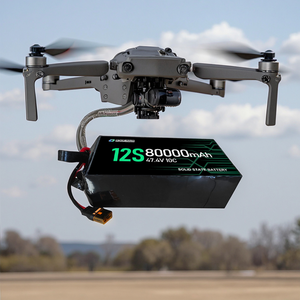
High-altitude unmanned aerial vehicles (UAVs) performing perimeter security across the Asir and Northern Border provinces encounter atmospheric temperatures down to -30°C. Our ultra-lightweight high-rate 10C-20C low-temperature lithium pouch cells ensure maximum energy density without voltage breakdown during rapid maneuvers.
Desert telecom towers situated along vast highway corridors (e.g., Highway 10) experience day-to-night temperature swings spanning over 40°C. Low-temp LiFePO4 batteries prevent thermal shutdown during cold desert nights while resisting thermal runaway under harsh day conditions.
Aligning advanced battery manufacturing and export with the National Industrial Development and Logistics Program (NIDLP) and SABER quality standards.
Under the ambitious umbrella of Saudi Vision 2030, the Kingdom is rapidly transforming into a regional industrial powerhouse and logistics gateway linking Asia, Europe, and Africa. Key macroeconomic drivers shaping the demand for low-temperature lithium battery solutions include:
All battery packs imported into KSA must comply strictly with SASO (Saudi Standards, Metrology and Quality Organization) regulations via the SABER e-platform. Our products hold authentic IEC 62619, IEC 62133, and UN38.3 certification test reports to guarantee hassle-free clearance through Saudi Customs (ZATCA).
Expansion of cold-chain transportation infrastructure for food security and healthcare logistics across Dammam, Jeddah, and Riyadh requires robust electrification solutions capable of withstanding ambient sub-zero storage without capacity fade.
Flagship mega-developments such as NEOM, the Red Sea Project, and Qiddiya mandate sustainable, zero-emission battery energy storage systems (BESS) designed for decade-long lifespans in tough desert-to-mountain microclimates.
Providing complete end-to-end custom battery pack engineering, custom smart BMS architecture, and ISO9001:2015 quality control for international OEMs and Saudi contractors.
Every low-temperature cell and assembled pack undergoes automated internal resistance grading, thermal shock cycling (-40°C to +60°C chambers), vibration testing, and laser welding verification.
Proprietary Battery Management Systems featuring RS485 / CANbus 2.0B / Modbus communication protocols for remote monitoring. Free configurable parameters for precise SOC/SOH calculation under cold conditions.
Specializing across solid-state, LFP (Lithium Iron Phosphate), NMC (Nickel Manganese Cobalt), and LTO (Lithium Titanate Oxide) chemistries tailored specifically to your project's power and budget targets.
Answers to common technical, compliance, and logistics questions raised by B2B buyers, procurement managers, and system integrators in Saudi Arabia.
Need custom voltage, high-discharge rates, sub-zero chemistry, or SABER-compliant energy storage for your Saudi Arabian project? Speak directly with our battery engineering specialists today.
Contact Us