
Engineered for extreme sub-zero operation, rapid DC charging, and 4,000+ deep cycle longevity in Kazakh transit fleets.


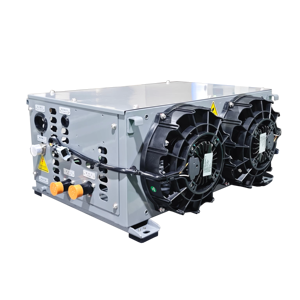

As Kazakhstan accelerates its national clean transit transition under the Green Kazakhstan 2026 Strategy, municipal operators in metropolitan hubs such as Almaty, Astana, Shymkent, and Karaganda face an extraordinary engineering paradox: deploying high-energy electric buses capable of enduring one of the most severe continental climate swings in the world. Operating e-buses in Central Asia demands an energy storage architecture that maintains sub-zero discharge performance down to -45°C while preventing severe thermal degradation during blazing summer heat exceeding +40°C.
As an established tier-1 manufacturer and international exporter of high-voltage Lithium Iron Phosphate (LiFePO4) energy storage and active Battery Thermal Management Systems (BTMS), our factory delivers complete, OEM-certified traction battery solutions. We bridge high-density cell chemistry, advanced liquid thermal balancing, and custom automotive-grade CAN bus telematics to fulfill the strict technical specifications required by municipal transit authorities and vehicle assemblers across the Eurasian Economic Union (EAEU).
Commercial vehicle electrification in Kazakhstan is not a one-size-fits-all engineering task. Our custom battery packs and BTMS units are optimized across distinct operational profiles:
Navigating ambient temperatures dropped below -40°C. Systems utilize our high-output 7.5kW–15kW liquid heat pump BTMS paired with internal copper heating elements to enable overnight park-up protection and rapid morning warm-up directly from grid power.
Continuous heavy stop-and-go routes along elevated city gradients require ultra-durable 280Ah/302Ah LFP cells joined by heavy-duty copper busbars. Designed to absorb intense regenerative current spikes without overheating or cell imbalance.
High ambient heat combined with full-cabin air conditioning places intense thermal load on high-voltage 540V–750V platforms. Our 8kW–12kW liquid cooling BTMS prevents cell temperatures from surpassing 45°C, eliminating thermal runaway risks.
Our heavy-duty electric bus battery systems are engineered using high-capacity prismatic LiFePO4 cells, active fluid-circuit thermal management, structural IP67/IP69K enclosures, and modular multi-tier Battery Management Systems (BMS).
| System Parameter | Standard City Bus Specification | Articulated Heavy Bus Specification | Mini Bus / Shuttle Specification |
|---|---|---|---|
| Nominal Battery Voltage | 540V DC – 650V DC | 650V DC – 750V DC | 96V DC – 384V DC |
| Installed Energy Capacity | 210 kWh – 350 kWh | 350 kWh – 525 kWh | 70 kWh – 140 kWh |
| Cell Chemistry & Form Factor | LFP Prismatic (280Ah / 302Ah) | LFP Prismatic (302Ah / 314Ah) | LFP Prismatic (100Ah / 250Ah) |
| BTMS Thermal Capacity | 5kW – 8kW Liquid Cooling & Heating | 12kW – 15kW Dual-Circuit BTMS | 3kW – 5kW Compact Cooling Unit |
| Operating Temperature Window | -40°C to +55°C (with Pre-Heat) | -45°C to +55°C (with Dual Heating) | -30°C to +50°C |
| Communication Protocol | Dual CAN 2.0B / SAE J1939 | Dual CAN 2.0B / SAE J1939 | CAN 2.0B / RS485 |
| Cycle Life (80% DOD @ 25°C) | ≥ 4,500 Cycles | ≥ 4,500 Cycles | ≥ 3,500 Cycles |
| Enclosure Protection Class | IP67 / IP69K Water-Tight | IP67 / IP69K Water-Tight | IP65 / IP67 |
The transit landscape across Central Asia is undergoing a structural shift driven by federal environmental mandates, Eurasian customs harmonizations, and regional decarbonization goals:
Electric buses imported into or assembled within Kazakhstan must conform to TR CU 018/2011 (On Safety of Wheeled Vehicles), UN R100 Rev 2/3 electrical safety standards, and UN 38.3 transport safety certifications. Our factory products are manufactured with full international safety compliance to ensure seamless customs clearance and certification.
Kazakhstan’s domestic commercial vehicle manufacturing base (in cities like Saran and Kostanay) is expanding rapidly. We supply complete SKD/CKD battery integration kits—including customized copper busbars, pre-wired BMS harnesses, and structural battery trays—enabling localized bus assemblers to achieve high local-content ratios.
To prevent grid instability during peak charging hours, municipal depots are increasingly installing stationary Battery Energy Storage Systems (BESS). Our 261kWh BESS containers feature liquid-cooled LiFePO4 packs that buffer energy from the grid during off-peak hours and deliver high-speed ultra-fast charging to arriving bus fleets.
Partnering directly with our manufacturing enterprise gives Kazakh fleet buyers, vehicle OEMs, and engineering contractors direct access to factory-grade pricing, custom design flexibility, and comprehensive warranty coverage:
Every step of our manufacturing pipeline—from laser cell sorting and ultrasonic wire bonding to pressure-tested liquid circuit assembly—adheres to strict automotive quality management protocols.
Prior to export shipment, every battery pack configuration undergoes 100% End-of-Line (EOL) automated testing, thermal cycle chamber validation (-45°C to +65°C), vibration table testing, and high-voltage insulation checks.
We provide streamlined overland multimodal rail and heavy-truck transport directly to Almaty, Astana, and major logistics hubs in Kazakhstan, backed by full dangerous goods (DG Class 9) UN38.3 documentation.
Our systems incorporate high-efficiency BTMS units with internal liquid heating loops and high-voltage PTC heaters. When parked outdoors in freezing conditions, the smart BMS activates low-power insulation thermal cycles using grid plug-in power. This maintains the battery core temperature above 10°C, allowing immediate full-power start-up and fast DC charging without cell lithium-plating risks.
Yes. Our engineering team customizes mechanical mounting dimensions, high-voltage connector interfaces, and CAN bus protocols (SAE J1939 / CANopen) to seamlessly interface with major domestic and imported vehicle control units (VCU) and instruments used throughout Kazakhstan.
Under standard operational parameters with active liquid BTMS thermal control, our Grade-A prismatic LFP cells achieve ≥ 4,500 full depth-of-discharge (80% DOD) cycles before capacity degrades to 80% SOH. In typical municipal city bus service (approx. 200–250 km daily), this translates to an operational lifespan of 8 to 12 years.
Absolutely. We supply 96V to 384V LFP battery packs complete with integrated CAN bus control, customized copper busbar connectors, high-voltage distribution units (PDU), and compact thermal cooling units tailored for mini-bus retrofits and light commercial EV conversions.
All exports are accompanied by CE, UN 38.3 test reports, MSDS safety data sheets, and Certificate of Origin documents. Our engineering designs comply with UN ECE R100 regulations required under the Eurasian Economic Union (EAEU) technical framework.
Standard production lead time for customized sample packs or batch orders ranges between 25 to 35 days. Overland rail/road shipping from our factory to major transit terminals in Almaty or Astana typically takes an additional 12 to 18 days.
Connect directly with our senior battery application engineers for customized pack configurations, thermal management sizing, and factory-direct export quotations.