
Custom-engineered lithium-ion, LiFePO4, Ternary NMC, and Solid-State battery systems for German OEMs and system integrators.

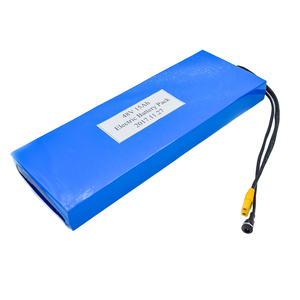


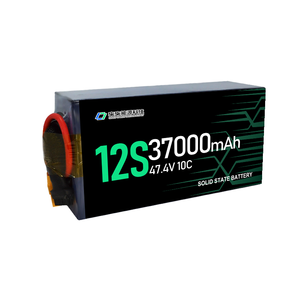
As the European Union intensifies its maritime decarbonization mandates under the EU Green Deal and Germany enforces strict zero-emission standards for inland and coastal shipping (such as the Bodensee Schifffahrts-Ordnung and Rhine clean transport guidelines), marine engineering firms and defense contractors in Germany are shifting away from traditional lead-acid and heavy silver-zinc submarine batteries. The modern deep-sea requirement demands compact, high-voltage, pressure-resistant, and non-propagating lithium-ion power modules capable of operating under extreme ambient hydrostatic pressures while complying with EU Battery Regulation 2023/1542.
Information Gain Insight: Unlike standard terrestrial EV energy storage packs, subsea submarine battery architecture demands specialized cell chemistry selection, oil-filled or pressure-compensated titanium enclosures, active multi-node BMS hardware, and mechanical isolation capable of enduring continuous 60 MPa (600 bar) external pressure environments without casing deformation or internal cell short-circuiting.
When procurement managers and senior engineering teams at German maritime OEMs (ranging from Kiel and Hamburg shipyards to subsea research institutions in Bremen) source Chinese lithium power suppliers, four core engineering vectors determine procurement selection:
Integration of IP68/IP69K enclosures utilizing 316L marine stainless steel, hard-anodized 7075-T6 aluminum alloys, or titanium pressure housings to eliminate moisture ingress and withstand deep-sea compression.
Redundant dual-microcontroller BMS architecture supporting CANopen, Modbus, and RS485 industrial protocols for direct plug-and-play synchronization with Siemens S7 and Beckhoff PLC control networks.
Single-cell isolation design using nano-aerogel insulation pads and phase-change materials (PCM) to prevent thermal runaway cascading across adjacent cells in confined submarine hulls.
Selection of lithium chemistry directly dictates volumetric energy density, operating cycle life, safety thresholds, and subsea thermal behavior. Below is a comparative engineering benchmark compiled by our Chinese R&D factory team specifically for German technical evaluators:
| Chemistry Type | Nominal Cell Voltage | Gravimetric Energy Density | Cycle Life (80% DoD) | Thermal Runaway Temp | Best German Application |
|---|---|---|---|---|---|
| LiFePO4 (LFP) High Safety | 3.2 V | 160 – 190 Wh/kg | > 3,500 Cycles | ~ 270 °C | Commercial Electric Boats, Deep Subsea Stationary Power, Passenger Ferries |
| Ternary NMC High Density | 3.6 V / 3.7 V | 240 – 280 Wh/kg | 1,200 – 2,000 Cycles | ~ 210 °C | Autonomous Underwater Vehicles (AUVs), Compact Reconnaissance Submarines |
| Solid-State Lithium Next-Gen | 3.8 V | 350 – 420 Wh/kg | > 2,500 Cycles | > 350 °C (Non-flammable) | Tactical Naval Submarines, Subsea Deep-Sea ROVs, High-Payload UAVs |
As China’s leading custom lithium battery module manufacturer, our factory designs tailored power solutions that address specific German industrial operational environments:
Powering unmanned subsea inspection vehicles (ROVs) and benthic crawlers deployed around offshore wind farms (e.g., North Sea Alpha Ventus). Modules engineered to withstand cold sea water temperatures (+2°C to +6°C) without internal voltage drop.
High-voltage 204V–800V LFP energy storage banks integrated into passenger ferries along the Rhine, Main, and Danube rivers, complying with German inland vessel emissions directives and DNV GL marine classification rules.
Compact 21700 smart 21.6V/48V modules integrated into automated guided vehicles (AGVs) operating inside German automotive production plants (Stuttgart, Munich, Wolfsburg). Features ultra-fast 1C–3C charging capability.
German buyers must navigate strict EU import regulations. Our manufacturing operations in China fully comply with:
Our state-of-the-art production base in China spans over 35,000 m² of ISO 9001:2015 certified manufacturing space, specializing in high-voltage custom lithium assembly for deep-sea and defense application standards.
Cell internal resistance matching within ±0.5mΩ and voltage sorting within ±2mV. Ultrasonic aluminum/copper busbar laser welding guarantees low resistance connections under heavy submarine vibration.
Our engineering team develops proprietary hardware BMS solutions featuring passive & active balancing (up to 5A balancing current), SOC/SOH state algorithms, and custom CANbus communication routines.
Every submarine power module undergoes hydrostatic chamber pressure validation up to 60 MPa, 48-hour salt spray exposure testing (IEC 60068-2-11), and 3-axis vibration testing prior to shipment.
Partner with China’s premier high-voltage submarine lithium battery manufacturer. Contact our senior battery engineering team today for technical datasheets, CAD 3D step files, and factory-direct pricing for the German market.