
Explore our industrial and residential grade hybrid storage architectures, manufactured under stringent European and international compliance standards (CE, UN38.3, IEC62619, UL1741).
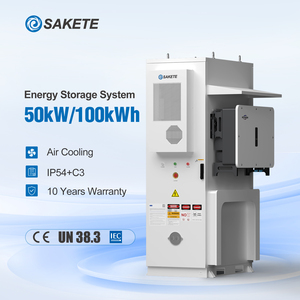


In modern energy transformation projects, selecting a top China hybrid solar inverter battery system supplier requires looking beyond superficial metrics like cost per kilowatt-hour ($/kWh). Industrial buyers and project developers must evaluate the internal architectural integration between the Photovoltaic (PV) Maximum Power Point Tracking (MPPT) stage, the bidirectional DC-DC conversion topology, and the Battery Management System (BMS).
A true enterprise-grade Hybrid Battery Energy Storage System (BESS) must deliver continuous operational resilience, dynamic grid synchronization, sub-10-millisecond UPS switching, and long-term electrochemical stability. As global grids become increasingly variable, hybrid architectures serve as the bridge between intermittent renewable generation and reliable dispatchable power.
When procuring hybrid systems from OEM factories in China, engineers typically choose between high-frequency (transformerless) and low-frequency (transformer-based) inverter platforms based on load characteristics:
| Evaluation Parameter | High-Frequency Transformerless Architecture | Low-Frequency Heavy Transformer Architecture |
|---|---|---|
| Power Density & Weight | Compact, lightweight design (~15-25 kg per 10kW unit) | Heavy, bulkier footprint (~50-85 kg per 10kW unit) |
| Peak Efficiency | Higher CEC efficiency (97.5% – 98.6%) | Slightly lower peak efficiency (93.0% – 95.5%) |
| Surge Capacity | 1.5x to 2x nominal power for 10-100ms | 3x nominal power for up to 10 seconds (Ideal for heavy motors) |
| Galvanic Isolation | Electronic isolation via high-frequency DC bus | True copper transformer physical galvanic isolation |
| Target Application | Residential rooftop, commercial urban ESS, telecom | Heavy industrial motors, rugged off-grid, mining, marine |
Combining world-class engineering standards with China’s gigawatt-scale manufacturing efficiency, our manufacturing ecosystem provides global EPCs, OEMs, and distributors with fully certified, high-reliability solar energy storage products. Built upon audited ISO9001:2015 processes and rigorous automotive-grade Quality Assurance (QA), our systems deliver multi-decade field performance.
Full traceability from raw cell incoming inspection (IQC) to final automated End-of-Line (EOL) testing under ISO9001 standards. Certified to CE, UN38.3, IEC62619, and UL1741.
Proprietary Battery Management Systems engineered for Lithium Iron Phosphate (LFP), Nickel Manganese Cobalt (NMC), and Lithium Titanate Oxide (LTO) cell chemistries.
We exclusively integrate factory-fresh Tier-1 prismatic cells (CATL, EVE, BYD) with precise capacity, internal resistance (IR), and voltage matching prior to module assembly.
Zero-license configurable software interface allowing real-time parameter tweaking, live telemetry diagnostics, and remote firmware over-the-air updates.
Scalable low-voltage (48V/51.2V) and high-voltage (100V-800V) battery architectures supporting up to 15 units in parallel for commercial and industrial plants.
End-to-end mechanical enclosure customization, private label branding, wire harness design, and customized protocol integration for local market dominance.
As the international renewable energy market evolves, sourcing executives must align procurement strategies with emerging technical and regulatory trends. Purchasing hybrid inverter systems requires anticipation of grid code changes, cell chemistry innovations, and digital software integration.
While 48V/51.2V systems remain popular for residential applications up to 10kW due to installation simplicity, commercial installations are rapidly shifting to High-Voltage (HV) BESS stacks (200V - 800V DC). HV systems reduce I²R copper losses by up to 60%, improve round-trip conversion efficiency (RTE) to over 95%, and allow thinner cabling, significantly cutting balance-of-system (BOS) costs in installations exceeding 20kWh.
Future-proof hybrid inverters now integrate embedded IoT edge computing capable of real-time communication with dynamic electricity spot markets (e.g., Nord Pool, CAISO, Octopus Agile). Advanced algorithms automatically optimize charging cycles during negative peak pricing hours and discharge during high-demand windows, converting passive storage hardware into an active revenue-generating asset.
Next-generation factories in China are introducing multi-chemistry hybrid energy storage platforms. Combining high-density Lithium Iron Phosphate (LiFePO4) with ultra-fast discharging Sodium-Ion (Na-Ion) or Lithium Titanate (LTO) cells allows energy systems to operate reliably under extreme temperature conditions (-40°C to +60°C) while maintaining an exceptional cycle life of 10,000+ cycles.
Regulatory frameworks such as the European Union’s new Battery Regulation demand complete supply chain transparency, carbon footprint verification, and recycled material percentages. Leading Chinese suppliers are adopting blockchain-backed Digital Battery Passports, giving B2B importers total traceability of cell origin, raw material sourcing, and lifecycle health logging.
To avoid common procurement pitfalls when importing hybrid solar battery storage systems, engineering teams should evaluate suppliers against five core criteria:
Thermal runaway is the primary hazard in high-density lithium storage. Top tier factories employ multi-layered thermal barriers including aerogel insulation sheets between cells, heavy-duty aluminum heat sinks, active liquid cooling loops for commercial containers, and automated aerosol or fire-suppression sprinklers built directly into the battery rack chassis.
Passive balancing dissipates excess energy as heat through resistors, limited to low balancing currents (50mA - 200mA). For long-term system health in heavy-duty commercial applications, demand Active Balancing BMS architecture capable of 2A to 5A bi-directional charge transfer between cells, extending usable pack capacity by up to 15% over a 10-year service lifetime.
Ensure that the hybrid inverter firmware supports localized grid standards such as VDE-AR-N 4105 (Germany), G99/G100 (UK), AS/NZS 4777.2 (Australia), and UL1741 SA/SB (North America). The inverter's anti-islanding hardware must disconnect from the public grid within <20ms during grid failures to protect line maintenance workers.
In three-phase commercial installations, unbalanced loads between phases frequently trigger inverter trips. Advanced China hybrid suppliers offer 100% asymmetrical three-phase output control, enabling a single inverter to deliver unequal power across phases (e.g., L1: 5kW, L2: 2kW, L3: 0kW) without fault shutdown.
Answers to common technical, logistics, and compliance questions faced by solar system integrators, distributors, and EPC contractors.
Looking for reliable OEM/ODM solar battery storage solutions, custom BMS engineering, or bulk factory pricing for your upcoming commercial projects? Connect directly with our application engineers today.