
Engineered for Arctic Drones, Submarine Vehicles, Cold-Chain Logistics, EV Forklifts, and Extreme Energy Storage Systems (ESS)


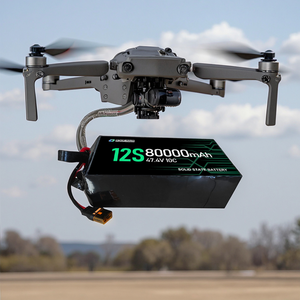
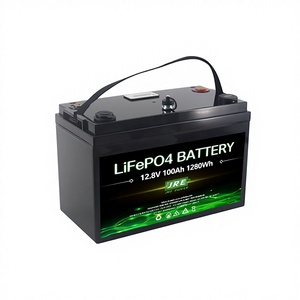
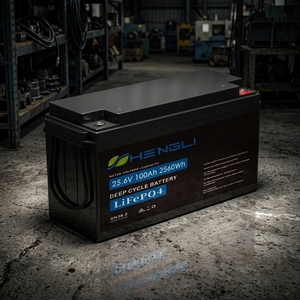
Standard lithium-ion battery chemistry suffers rapid capacity degradation and severe polarization when exposed to freezing ambient conditions below 0°C. At sub-zero temperatures (ranging from -20°C down to -40°C), traditional liquid electrolytes experience extreme viscosity increases, dramatically reducing ionic conductivity. Simultaneously, charge transfer resistance at the solid electrolyte interphase (SEI) layer escalates by orders of magnitude, causing standard lithium cells to lose over 60% to 80% of their operational capacity, or completely lock up during high-rate discharge.
Key Information Gain Note: Modern low-temperature lithium-ion battery packs overcome electrochemical freezing by integrating fluorinated carbonate co-solvents (such as FEC and DFEC), functional electrolyte additives, semi-solid gel states, and automated internal heating film matrices controlled by Smart BMS algorithms.
When charging standard lithium cells below freezing temperatures without thermal conditioning, metallic lithium ions cannot intercalate into the graphite anode quickly enough due to sluggish diffusion kinetics. Instead, lithium ions deposit onto the anode surface as metallic lithium dendrites—a destructive phenomenon known as lithium plating. This not only permanent degrades battery capacity but also risks piercing cell separators, causing micro short-circuits and catastrophic thermal runaway once the pack warms up.
| Battery Chemistry Type | Discharge Cut-off Temp | Capacity Retention (-20°C) | Capacity Retention (-40°C) | Lithium Plating Resistance |
|---|---|---|---|---|
| Standard Commercial NCM/LFP | -20°C | 30% – 45% | 0% (Inoperable) | Very Low (Risk during low charge) |
| Low-Temp LiFePO4 (Self-Heating) | -30°C | 75% – 82% | 40% – 50% | High (Active Pre-Heat Enabled) |
| Semi-Solid State Low-Temp Li-Ion | -40°C | 85% – 90% | 65% – 75% | Ultra-High (Dendrite Suppression) |
| Lithium Titanate Oxide (LTO) | -50°C | 88% – 94% | 78% – 85% | Immune (Zero-Strain Anode) |
Identifying qualified OEM manufacturers and manufacturing factories for extreme sub-zero lithium-ion battery packs requires strict evaluation beyond basic cell energy density. Industry-leading factories are distinguished by their cell electrochemistry modifications, custom battery management system (BMS) firmware, thermal insulation engineering, and rigorous environmental stress screening (ESS).
Leading factories formulate proprietary low-viscosity liquid or semi-solid polymer electrolytes capable of maintaining rapid lithium ion transport down to -40°C.
Integrated PTC heating elements and flexible polyimide heating films automatically draw power from auxiliary lines or internal cells to warm the battery matrix prior to charging.
Factories must hold ISO9001:2015 accreditation, UN38.3 transport certification, UL1642 cell approval, and execute altitude freeze-thaw thermal cycling tests.
The top tier low-temperature lithium battery pack factories serve high-stakes engineering sectors including aerospace UAVs operating at high altitudes, subsea exploration vehicles, Arctic defense monitoring stations, and cold-storage logistics forklifts requiring 24/7 continuous operation without rapid thermal decay.
As global decarbonization accelerates into polar regions, cold-chain automation, and high-altitude defense applications, key procurement trends are reshaping how B2B buyers select low-temperature lithium battery factories:
Traditional liquid electrolytes present severe freezing points and flammability risks. Semi-solid state low-temperature battery packs utilize hybrid solid-liquid polymer electrolytes. This breakthrough technology delivers an energy density exceeding 280 Wh/kg while supporting high C-rate discharge (10C–20C) even at -30°C to -40°C without risk of explosive thermal runaway.
Modern B2B buyers demand real-time telemetry integration. Advanced low-temperature BMS systems incorporate CANbus, SMBus, Modbus, or Bluetooth mesh connectivity. Configuration platforms allow engineering managers to monitor individual cell voltage, internal resistance, thermal gradients, and SOC (State of Charge) health metrics remotely, preventing cold-temperature undercharging or thermal stress.
Next-generation battery packs utilize pulse-current internal Joule self-heating. By pulsing ultra-high frequency AC currents between cell pairs inside the pack, the internal cell resistance generates heat uniform throughout the jelly-roll within 3 to 5 minutes, consuming 70% less energy than external thermal insulation wraps.
Specializing in custom lithium-ion battery design, proprietary Battery Management Systems (BMS), and precision li-ion pack assembly. Trusted by global OEMs across marine, defense, automotive, robotics, sub-zero energy storage, and industrial equipment sectors.
At temperatures below 0°C, the intercalation kinetic rate of lithium ions into the graphite anode slows significantly. Forcing standard charging causes lithium ions to convert into metallic lithium on the anode surface (lithium plating). This permanently reduces battery capacity, lowers cycle life, and creates dendrites that can penetrate the separator, causing internal short circuits and thermal failure. Low-temperature batteries mitigate this using altered electrolytes, modified anode materials, or automated BMS self-heating circuits.
Passive low-temp cells utilize specialized chemical formulations (e.g., custom solvent additives, nano-structured anodes) that naturally permit sub-zero discharge down to -30°C or -40°C without heating. Active self-heating battery packs incorporate internal silicon heating pads or pulse-heating BMS elements that actively warm the internal core to above 0°C before initiating charging or heavy discharge cycles, ensuring maximum safety and prolonged service life.
Semi-solid state lithium batteries replace volatile liquid electrolytes with a gel-polymer network. This drastically reduces electrolyte freezing points, maintains high ionic conductivity at sub-zero temperatures (down to -40°C), increases energy density up to 280–300 Wh/kg, and eliminates thermal runaway risks associated with traditional liquid electrolyte degradation under high discharge rates.
For cold-storage warehouse equipment (operating between -15°C and -30°C continuously), Low-Temperature LiFePO4 (Lithium Iron Phosphate) with integrated self-heating BMS is optimal. It offers exceptional thermal stability, over 4000 to 6000 cycle lives, fast charging capabilities, and lower total cost of ownership (TCO) compared to traditional lead-acid or standard NMC packs.
When submitting an OEM inquiry, provide: 1) Operating & storage ambient temperature ranges; 2) Peak continuous discharge current (C-rate); 3) Maximum dimensional footprint & total weight constraints; 4) Target nominal voltage and capacity (Wh or Ah); 5) Ingress protection requirements (e.g., IP67 waterproof/dustproof); and 6) BMS communication protocols (CANbus, UART, RS485).