
Explore our tier-1 engineering solutions, ranging from ultra-high rate solid-state pouch cells and high-current prismatic LiFePO4 modules to commercial containerized ESS configurations.
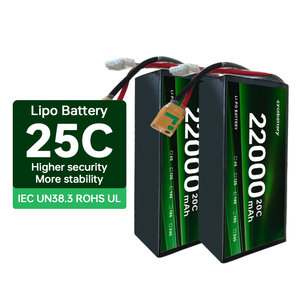


As the global transition toward electrification accelerates across defense, aerospace, unmanned aerial vehicles (UAVs), automotive, and heavy industrial automation, the demand for China top high discharge lithium ion battery supplier networks has shifted from standard energy-dense storage toward specialized high C-rate power systems. High-discharge lithium-ion batteries are electrochemical power units engineered to release massive current bursts (ranging from 10C continuous to over 50C pulse loads) without suffering catastrophic thermal runaway, excessive voltage sagging, or rapid structural degradation of the Solid Electrolyte Interphase (SEI) layer.
Achieving superior high-discharge performance requires comprehensive architectural innovations across both cell electrochemistry and battery pack hardware. Leading Chinese manufacturers now lead the global market by integrating nano-engineered cathode materials, multi-tab or tabless current collector configurations, and low-impedance synthetic graphite or silicon-carbon anodes. This deep-dive engineering whitepaper evaluates the core technical parameters, procurement criteria, and future development vectors that procurement officers and systems integration engineers must master when sourcing high-power energy systems from China.
The rate capability (C-rating) of a lithium-ion cell defines how fast its stored electrochemical energy can be safely drawn down. A 1C rate drains the full cell capacity in 1 hour; a 30C rate delivers full discharge in just 2 minutes. When operating under extreme discharge rates, standard cells generate severe internal Joule heating ($P = I^2 R_{int}$), causing severe thermal polarization, electrolyte oxidation, and rapid voltage drop.
To overcome these physical constraints, certified high-discharge suppliers implement four fundamental engineering breakthroughs:
Selecting the optimal battery chemistry requires balancing gravimetric energy density against pulse power density, safety profiles, and expected cycle life. The technical matrix below summarizes current OEM benchmark data across China's leading battery manufacturing lines:
| Chemistry Architecture | Continuous / Peak C-Rate | Energy Density (Wh/kg) | Cycle Life (80% DOD) | Optimal Application Vector |
|---|---|---|---|---|
| LiCoO2 (LCO High Rate Pouch) | 25C / 50C Pulse | 190 - 230 Wh/kg | 300 - 500 Cycles | RC Racing, FPV Drones, Heavy UAV Launchers |
| NMC High Power (18650 / 21700) | 10C / 25C Pulse | 240 - 275 Wh/kg | 800 - 1,200 Cycles | Hyper EV Powertrains, Professional Power Tools |
| LiFePO4 (LFP Industrial Prismatic) | 3C Continuous / 8C Pulse | 160 - 180 Wh/kg | 4,000 - 6,000+ Cycles | Commercial Golf Carts, AGVs, Heavy ESS Storage |
| Solid-State (Polymer / Inorganic) | 10C Continuous / 20C Pulse | 320 - 400 Wh/kg | 1,000 - 1,500 Cycles | Defense VTOL, Urban Air Mobility (eVTOL), Robotics |
| Lithium Titanate (LTO Heavy Duty) | 10C Continuous / 30C Pulse | 80 - 110 Wh/kg | 15,000 - 20,000+ Cycles | Rail Transit, Grid Frequency Regulation, Submarines |
As global engineering requirements evolve, procurement directors must anticipate critical macro trends reshaping China’s battery manufacturing ecosystem over the coming decade:
The primary barrier to sustaining ultra-high current rates is heat dissipation. When a 100Ah battery pack discharges at 5C (500 Amperes), heat generation inside the core of the cells can cause localized temperature surges exceeding 80°C. Left unmanaged, thermal runaway propagates rapidly across adjacent cells.
Tier-1 Chinese suppliers mitigate thermal risk through three advanced pack-level structural designs:
Combining certified manufacturing processes, ISO9001:2015 precision engineering, and complete bespoke customization capabilities for global industrial OEMs.
Our fully automated cell grading, laser tab welding, and pack assembly lines operate under strict ISO9001:2015 quality control systems. Every cell undergoes 100% capacity matching and internal resistance (AC-IR) sorting prior to module configuration.
We provide full custom engineering for low-voltage (LV) and high-voltage (HV) Battery Management Systems. Featuring free configuration software (AlterVU), our BMS platforms support CANOpen, Modbus, Bluetooth, and custom IoT telemetry protocols.
Every high-discharge pack configuration is validated in our in-house testing facilities. We conduct UN38.3 vibration analysis, short-circuit testing, thermal shock endurance (-40°C to +65°C), nail penetration, and high-altitude low-pressure simulation.
Clear, authoritative technical answers to assist engineering leads, supply chain managers, and OEM buyers in specifying high-discharge lithium batteries.
The continuous discharge rate (e.g., 25C continuous) represents the maximum current a fully charged battery can deliver indefinitely until depleted without exceeding its safe thermal ceiling or causing cell damage. The peak pulse discharge rate (e.g., 50C pulse for 5 seconds) defines the short-burst current output achievable during rapid acceleration or engine cranking. Operating above the continuous limit for longer than specified pulse windows causes rapid electrolyte boiling and cell swelling.
Discharging cells at high rates elevates internal mechanical stress, thermal expansion, and lithium-ion diffusion gradients within the electrode matrices. Over time, this accelerates micro-cracking of active cathode particles and thickens the SEI layer on the anode. However, by selecting Grade-A cells engineered with multi-tab current collectors and integrating smart BMS thermal protection, high-discharge packs can maintain 80% capacity retention over 800 to 1,500 cycles under heavy load conditions.
In a high-current battery pack consisting of series and parallel strings, any inconsistency in cell capacity or AC internal resistance (AC-IR) creates significant current imbalance. The cell with the lowest internal resistance will carry a disproportionate share of the discharge current, leading to localized overheating and premature degradation. Our factory utilizes 100% automated cell grading, matching cells within ±0.05mΩ resistance and ±5mAh capacity tolerances before pack assembly.
Not inherently. While a cell may safely discharge at 30C, charging at 30C could cause immediate metallic lithium plating on the anode surface, leading to dendrite growth and internal short circuits. However, specialized ultra-fast charging cells (utilizing specialized graphite-silicon anodes) support charge rates up to 5C (12-minute full charge) when paired with a temperature-regulated charging station managed by CANbus protocol communication.
High-discharge lithium batteries are classified as Class 9 Dangerous Goods. To legally ship internationally via sea freight or air freight, battery packs must possess UN38.3 test summary reports, MSDS (Material Safety Data Sheets), UN5486 packaging compliance, and CE/UL certifications. Our export logistics department manages full Dangerous Goods packaging, UN-rated fiberboard boxes or wooden crates, and customs clearance documentation globally.
For custom engineering projects, concept design, 3D CAD modeling, and custom BMS configuration take approximately 1 to 2 weeks. Prototype sample build and preliminary safety testing require 2 to 3 weeks. Following prototype sign-off and UN38.3 certification, full-scale mass production lead time typically ranges from 4 to 6 weeks depending on raw material sourcing and custom enclosure tooling requirements.
Whether you require custom 50C drone pouch packs, 250A continuous golf cart LiFePO4 batteries, or solid-state UAV solutions, our technical engineering team is ready to assist your team with comprehensive design and quotation services.
Get Catalog