
Explore our factory-direct, CE-certified battery pack assemblies, high-power cooling units, precision copper connectors, and integrated BESS energy swapping architectures.


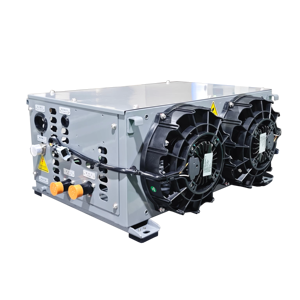

As municipal transit networks and global fleet operators accelerate their zero-emission mandates, selecting a robust, thermally stabilized, and long-cycle electric bus battery system has become the cornerstone of sustainable urban mobility. Modern electric buses demand energy storage architectures capable of handling rapid charge-discharge profiles (up to 2C–3C fast charging), extreme ambient temperature swings (-30°C to +55°C), and stringent safety standards such as ECE R100.03 and ISO 26262 ASIL-D functional safety compliance.
In China—the global epicenter of commercial EV manufacturing—battery technology has transitioned beyond standard pack assembly into holistic system integration. This evolution leverages high-density Lithium Iron Phosphate (LiFePO4/LFP) chemistries, direct Cell-to-Pack (CTP) structural configurations, active liquid Battery Thermal Management Systems (BTMS), and smart cloud-connected Battery Management Systems (BMS).
Lithium Iron Phosphate remains the gold standard for electric buses due to its exceptional thermal runaway limit (~270°C onset), non-toxic chemical structure, and cost per kWh profile. High-capacity prismatic cells (such as 230Ah, 280Ah, and 302Ah) allow heavy-duty buses to achieve 300+ km single-charge ranges while maintaining over 4,000 to 6,000 deep discharge cycles.
Air-cooled battery packs are no longer viable for high-utilization transit fleets. Modern liquid cooling units ranging from 3kW to 15kW circulate water-glycol coolant directly through micro-channel cold plates beneath cell modules, maintaining core cell delta-T within ≤3°C. This active thermal control prevents localized hot spots and eliminates thermal degradation during megawatt-level charging.
Heavy commercial electric buses operate on 480V to 750V DC architectures to minimize current draw and resistive heating losses ($I^2R$). Utilizing laser-welded laminated copper busbars engineered for 300A–500A continuous load ensures structural elasticity under chassis vibration, zero contact resistance spikes, and long-term mechanical reliability.
Fleet managers, OEM chassis builders, and public transport authorities must align their procurement criteria with rapid technological advancements. Here are the pivotal trends shaping commercial electric bus battery sourcing:
To reduce cable harness weight, lower copper usage, and facilitate ultra-fast charging (15 to 20 minutes to 80% SOC), bus procurement is rapidly shifting from legacy 400V/540V systems to 750V and 1000V DC platforms. OEM buyers must verify that BTMS chillers, DC/DC converters, and BMS main contactors are certified for high insulation resistance (>500 Ω/V) and high voltage clearance.
For high-frequency urban routes operating 24/7, long depot charging downtime is economically prohibitive. Battery Swapping Infrastructure utilizing standardized 200kWh–300kWh liquid-cooled BESS containers allows fully depleted bus battery packs to be mechanically swapped within 3 to 5 minutes. Procurement strategies now frequently bundle on-bus battery packs with stationary depot BESS buffers.
Sourcing guidelines increasingly mandate CAN-bus 2.0B / SAE J1939 telemetry integrated with cloud-based digital twin models. Modern BMS platforms monitor individual cell voltage, internal impedance (AC IR), and thermal gradients in real time. AI algorithms calculate State of Health (SOH) drift and predict thermal events up to 72 hours before critical failures occur.
By eliminating intermediate module housings and wiring harnesses, CTP architecture increases volumetric energy density by 15%–20% and reduces pack component counts by 40%. Buyers benefit from lower overall vehicle curb weight, increased passenger carrying capacity, and simplified mechanical maintenance routines over a 10-to-12-year service lifecycle.
Global export standards—particularly the EU Battery Regulation—demand full supply chain transparency. Exporters must provide carbon footprint declarations, recycled material percentages (lithium, cobalt, nickel), and end-of-life battery passport data. Partnering with top-tier Chinese manufacturers guarantees complete raw material traceability and compliance with international transport standards (UN 38.3, MSDS).
Sub-zero operational requirements in Northern Europe, North America, and Central Asia have elevated the need for reverse-cycle liquid thermal management. Advanced BTMS units feature integrated PTC heaters (5kW–10kW) combined with heat pump chiller systems, ensuring rapid pre-heating of LiFePO4 packs at -30°C ambient temperatures while minimizing auxiliary cabin heating drain.
A comprehensive engineering comparison of thermal management systems and battery integration components for electric bus fleets.
| System Model / Component | Rated Voltage / Current | Cooling / Heating Capacity | Operating Temperature | Communication & Certs | Primary Application |
|---|---|---|---|---|---|
| Fybdcool 5kW BTMS | 24V DC / Integrated DCDC | 5.0 kW Cooling (Single Circuit) | -20°C to +50°C | CAN 2.0B / CE Certified | 8-10m City Electric Transit Buses |
| KUS Heavy-Duty BTMS | DC 450V - 750V High Voltage | 3.0 kW - 15.0 kW Variable Output | -30°C to +55°C | SAE J1939 / ECE R100 | 12-18m Articulated & Double-Decker Buses |
| 12KW OEM Liquid Chiller | 540V DC Nominal Input | 12.0 kW Liquid Cooling Unit | -25°C to +55°C | CAN Bus Control / ISO 26262 | Heavy Commercial Vehicles & Coaches |
| NF 7.5KW Compact BTMS | 350V - 600V DC Operating | 7.5 kW Cooling + 6kW PTC Heating | -30°C to +50°C | CE / UN38.3 Tested | Standard Municipal Feeder Buses |
| JINMAO Busbar Connector | 480V DC / 300A Continuous | Low Resistance Copper (<0.05 mΩ) | -40°C to +125°C | UL94-V0 Flame Retardant | 230Ah-302Ah LiFePO4 Cell Interconnects |
| 261kWh Depot BESS Unit | 700V DC Nominal Output | Integrated Liquid Cooling Loop | -20°C to +45°C | IEC 62619 / Grid Tied Control | Bus Swapping Stations & Fast Depots |
As a premier supplier and exporter of electric bus battery systems in China, our manufacturing infrastructure combines automated robotic assembly lines with rigorous automotive-grade testing protocols. We bridge the gap between initial prototype engineering and large-scale fleet deployments, providing international OEM clients with tailored ODM solutions backed by full international certification compliance.
Addressing critical technical, operational, and regulatory questions raised by vehicle manufacturers and transit operators.
Our automotive-grade LiFePO4 electric bus battery systems offer 4,000 to 6,000 deep charge-discharge cycles at 80% Depth of Discharge (DOD). Under standard urban operating conditions with active liquid thermal management, this translates to a service life of 10 to 12 years before reaching 80% remaining capacity (EOL).
Air cooling lacks the thermal dissipation capacity required during continuous high-current discharge (e.g., steep climbs, fully loaded passenger capacity) and fast charging above 1C. Liquid BTMS systems maintain cell temperature uniformities within ±2°C, preventing accelerated cell degradation, thermal runaway risks, and capacity imbalance across large battery arrays.
Our BTMS units feature dual-mode operation combining an R134a/R410a refrigerant chiller loop with high-efficiency PTC fluid heaters (up to 10kW capacity). When sensors detect sub-zero cell temperatures, the system automatically engages pre-heating loops to warm up the battery core prior to charging, preventing lithium plating on cell anodes.
Yes. Our smart BMS platforms support configurable CAN-bus communication protocols (CAN 2.0B, SAE J1939, or custom DBC files). We collaborate directly with OEM software engineers to map state-of-charge (SOC), isolation status, fault alarms, and cooling control signals directly to the vehicle control unit (VCU) and dashboard displays.
All exported electric bus battery products carry comprehensive testing certificates required by global customs authorities and transit regulations, including UN 38.3 (Transport Safety), MSDS, CE Certification, IEC 62619, and test reports supporting compliance with ECE R100.03 automotive electric vehicle safety standards.
Standard BTMS chillers and stock connector components ship within 10–15 days. Custom-designed battery packs involving bespoke structural enclosures, dedicated harness routing, and tailored busbar stamping typically require 4 to 6 weeks for design validation, engineering samples, and final batch assembly.
Partner with China's leading electric bus battery system exporter. Contact our Senior Engineering Team today to request custom pack drawings, thermal management simulation data, or wholesale commercial quotations.