
Engineered for high energy density, deep cycle reliability, and high hydrostatic pressure tolerance. Fully customisable for marine propulsion and subsea exploration.

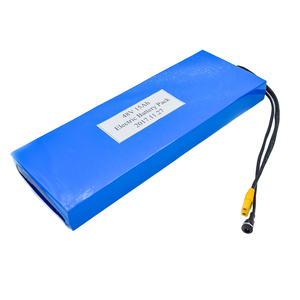


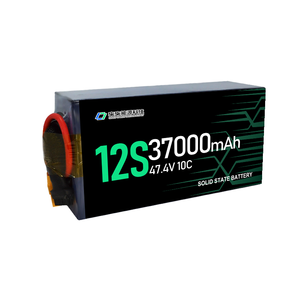
As a UK-based, ISO9001:2015 certified manufacturer and global exporter, Altertek stands at the forefront of custom lithium-ion battery integration for deep-sea submersibles, Autonomous Underwater Vehicles (AUVs), Remotely Operated Vehicles (ROVs), and marine electric propulsion systems. Engineering battery power for underwater operating environments requires an uncompromising commitment to structural integrity, thermal dynamics, chemical stability, and failure-proof electronics.
Submarine energy deployment represents one of the most hazardous application spaces in modern electrochemistry. Standard commercial lithium battery modules are incapable of enduring the atmospheric pressure differentials, oceanographic thermal shifts, and enclosed air-recirculation constraints inherent to subsurface vessels. Altertek addresses these challenges through end-to-end bespoke hardware design, customized Battery Management Systems (BMS), and rigorous pressure-chamber validation protocols.
Full traceability across cell grading, nickel tab welding, insulation barrier placement, enclosure seals, and stress validation testing.
UK-designed hardware and firmware providing real-time telemetry, active cell balancing, fault detection, and dual-redundant CANbus loops.
Expert integration of LiFePO4 (LFP), LiNiMnCoO2 (NMC), Lithium Titanate (LTO), and cutting-edge Solid-State electrolyte cells.
Subsea electrification demands a multi-disciplinary approach spanning thermal mechanics, high-voltage isolation, and chemistry management. Below is an authoritative analysis of the critical design pillars required for CE-certified submarine power modules.
Submarine power packs must operate flawlessly under atmospheric pressures ranging from surface level down to trench depth (exceeding 600 Bar in deep-sea robotic exploration). Subsea enclosures fall into two primary mechanical paradigms: Isobaric Pressure Vessels (maintaining 1 atm internally via titanium, anodised marine aluminum, or stainless steel shells) and Pressure-Tolerant Encapsulated Modules (filling voids with specialized dielectric fluids or solid polymers to match ambient ocean hydrostatic pressure).
Altertek’s CE-certified modules feature marine-grade aluminum housing treated with hard anodization, dual O-ring hermetic sealing, and stainless steel fasteners engineered to eliminate galvanic corrosion in salt-water environments. Moisture penetration sensors and internal pressure transducers feed continuous diagnostic data into the central BMS.
Choosing the correct lithium chemistry involves trade-offs between volumetric energy density (Wh/L), gravimetric energy density (Wh/kg), inherent safety, and operating cycle life. The comparison table below illustrates how different chemistries serve distinct subsurface intent profiles:
| Battery Chemistry | Energy Density (Wh/kg) | Cycle Life (80% DoD) | Thermal Runaway Onset | Primary Submarine Application |
|---|---|---|---|---|
| LiFePO4 (LFP) | 160 - 190 Wh/kg | 2,000 - 5,000 Cycles | High (~270°C) | Heavy Manned Submersibles, High-Safety Marine Propulsion |
| NMC Ternary | 230 - 280 Wh/kg | 500 - 1,500 Cycles | Moderate (~210°C) | Long-Range Oceanographic AUVs & Compact Submersibles |
| Solid-State Electrolyte | 350 - 450 Wh/kg | 1,000 - 3,000 Cycles | Ultra-High (>400°C) | Next-Gen Endurance Submarines & High-Altitude Drones |
| LTO (Lithium Titanate) | 80 - 110 Wh/kg | 15,000+ Cycles | Extremely Stable | Rapid-Charge Emergency Power & Heavy Subsea Winches |
The Battery Management System is the brain of any submarine power module. In closed underwater environments, an electrical short or runaway cell can result in critical vessel failure. Altertek’s AlterVU BMS architecture incorporates multi-stage physical and digital hardware protection:
As global marine defense, offshore energy, and oceanographic research sectors accelerate decarbonization, procurement specifications for submarine lithium modules are undergoing a structural evolution. Enterprise buyers and defense contractors must align purchasing strategies with the following emerging trends:
Legacy 48V and 100V DC subsea propulsion systems are rapidly shifting toward 400V - 800V high-voltage buses. High voltage dramatically reduces cable copper weight and minimizes thermal losses during sustained high-speed underwater cruising.
Solid-state batteries are entering procurement pipelines for deep-sea submersibles. Eliminating volatile liquid electrolytes provides unprecedented volumetric density while mitigating explosion risks under intense ambient pressures.
Procurement teams now require real-time machine learning models embedded in the BMS. By generating a digital twin of the battery pack, maintenance teams can predict cell degradation, internal resistance shifts, and remaining useful life (RUL).
The global marine electric propulsion market is experiencing exponential growth driven by international maritime environmental mandates (such as IMO 2030/2050 zero-emission targets). Submersibles, workclass ROVs, and offshore support vessels are replacing heavy lead-acid and hazardous silver-zinc battery packs with certified lithium-ion and solid-state alternatives.
Key drivers shaping the industry landscape include:
Frequently asked technical, compliance, and ordering questions from enterprise buyers, system integrators, and naval engineering teams.
Our submarine lithium power modules are designed and manufactured in accordance with strict international standards, including CE conformity, UN38.3 transport safety validation, IEC 62619 for industrial lithium batteries, and ISO9001:2015 quality control processes. For defense or specific marine vessel classification (such as DNV GL, Lloyd's Register, or ABS), we offer fully customized engineering documentation and subsea pressure testing compliance packages.
Safety is achieved through a multi-layered defence system: First, we select high-thermal-stability cell chemistries like LiFePO4 or Solid-State. Second, each cell is isolated using anti-propagation aerogel barriers and aluminum heat-sinking plates. Third, our proprietary AlterVU BMS constantly monitors cell-level micro-voltage variations and temperature trends, instantly disconnecting any compromised module string before thermal runaway can occur.
No. Standard lithium modules designed for electric land vehicles lack the hydrostatic pressure protection, salt-fog corrosion resilience, specialized hermetic electrical connectors, and dual-redundant BMS safety features required for subsurface operations. Using non-certified batteries underwater presents catastrophic fire, flooding, and gas buildup risks.
As a specialized manufacturer and exporter, Altertek offers custom dimensional design to fit legacy battery compartments, flexible voltage configurations (21.6V up to 800V+ DC), custom capacity sizing (10Ah to 1000Ah+), bespoke BMS telemetry protocols (CANbus, RS485, Modbus), and choice of cell chemistry based on your mission duration and weight budget.
All exported battery modules undergo UN38.3 certification testing for safe international transport. We handle complete Class 9 Hazardous Goods packaging, certified UN-approved timber crates, heat-treated wooden pallets, and complete customs documentation for air, sea, or road transport globally from our UK manufacturing facility.
All our BMS products include free access to our AlterVU BMS Configuration Software. This platform provides engineers with real-time cell visualization, log analysis, diagnostic parameter adjustments, and live state-of-health verification with zero recurring licensing fees.
Partner with an ISO9001:2015 certified UK engineering team. Contact our subsea power specialists today to discuss technical specifications, custom pack assembly, and international B2B export pricing.
Get a Quote