

Direct factory supply of certified 10C–16C high-rate pouch cells, semi-solid-state modules, and scalable LiFePO4/NMC battery systems configured for heavy-duty industrial demanding environments.


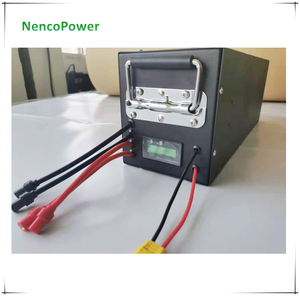

In modern industrial applications—ranging from hybrid powertrain acceleration, heavy-lift Vertical Take-Off and Landing (VTOL) UAVs, to tactical marine robotics—demand for energy storage technologies featuring both ultra-high discharge rates (10C–16C continuous) and high gravimetric energy density ($>300\text{ Wh/kg}$) has accelerated exponentially. Selecting qualified export partners and certified original equipment manufacturers (OEMs) requires a granular understanding of electrochemical dynamics, internal resistance thermal mitigation, and compliance frameworks governing the European Economic Area (EEA).
As a leading engineering entity and exporter specializing in custom battery modules, advanced Battery Management Systems (BMS), and pouch cell integration, this technical document details the engineering requirements for procurement, safety compliance, and thermal dynamic profiling of high-rate discharge lithium modules.
Multi-tab pouch architectures combined with laser-welded nickel-coated copper current collectors maintain internal impedance below $0.8\,\text{m}\Omega$, eliminating excessive Joule heating ($I^2R$) during 16C pulse surges.
Semi-solid-state electrolytes (SSB) replace volatile organic liquid solvents with non-flammable hybrid gel-polymer networks, expanding critical thermal runaway limits to over $180^\circ\text{C}$.
Engineered lattice structures suppress transition metal dissolution during rapid ion intercalation, enabling up to 1,000+ deep discharge cycles at 10C rates prior to reaching 80% initial capacity.
Procurement teams must match system chemistry to operational profiles. While Nickel Manganese Cobalt (NCM/NMC) pouch cells excel in gravimetric density, Lithium Iron Phosphate (LiFePO4) prismatic cells remain unmatched for calendar life and thermal stability in stationary and industrial drive applications.
| Cell Chemistry & Format | Gravimetric Density | Cont. Discharge Rate | Thermal Runaway Threshold | Ideal Application Vector |
|---|---|---|---|---|
| 3.7V NMC High-C Pouch | 240 – 270 Wh/kg | 10C continuous / 16C peak | $160^\circ\text{C} - 175^\circ\text{C}$ | UAV Drones, E-scooters, RC Robotics |
| 3.7V Semi-Solid-State (SSB) Pouch | 300 – 350 Wh/kg | 10C continuous | $>180^\circ\text{C}$ | Long-endurance VTOL, Aerospace defense |
| 3.2V Prismatic LiFePO4 (LFP) | 160 – 180 Wh/kg | 1C continuous / 3C pulse | $>270^\circ\text{C}$ | Industrial ESS, Heavy E-Mobility, Marine |
| 3.7V 18650 Cylindrical High-Rate | 210 – 240 Wh/kg | 8C continuous / 10C pulse | $150^\circ\text{C} - 165^\circ\text{C}$ | Portable Power tools, Light EV packs |
In high-discharge scenarios, thermal throttling is the primary limiting factor. During a continuous 10C or 16C discharge cycle, the rate of volumetric heat generation ($Q_g$) inside the cell is governed by the relation:
$Q_g = I^2 \cdot R_i + I \cdot T \cdot \left(\frac{\partial E_{ocv}}{\partial T}\right)$
Where $I$ is the working discharge current, $R_i$ is the internal impedance, $T$ is absolute temperature, and the second term represents reversible entropic heat generation. By engineered optimization of the electrode tab cross-sectional area and ceramic oxide separator coatings, our manufacturing partners minimize $R_i$, keeping surface temperatures under $65^\circ\text{C}$ even without active liquid cooling jacket attachments.
Importers and OEMs distributing lithium modules within the European single market must satisfy rigorous safety directives. The mandatory benchmark for high-rate lithium ion cells and battery modules is compliance with **EN 62133-2:2017** (Secondary cells containing alkaline or other non-acid electrolytes) and the **Low Voltage Directive (LVD) 2014/35/EU**.
Working with an ISO9001:2015 certified UK design and factory supply network guarantees complete traceability from raw chemical precursor sourcing to final pack assembly. Standard operational controls include:
Multi-layer tab joints welded via high-frequency ultrasonic transducers prevent micro-fractures, ensuring uniform current distribution during rapid 16C discharge bursts.
100% automated capacity sorting, DC internal resistance (DCIR) measurement, and voltage matching ($\Delta V < 3\text{mV}$) ensure pack uniformity and eliminate premature cell degradation.
Low and High-Voltage BMS integration supporting CANbus, SMBus, and RS485 communication protocols with customizable firmware cutoff thresholds.
Global procurement teams must adapt to rapid technological shifts in high-rate energy storage. Key trends defining the industry over the next five years include:
1. Transition to Solid-State Architectures (350+ Wh/kg): The replacement of liquid electrolytes with semi-solid gel polymer and oxide matrices allows high C-rate operation without the weight penalty of extensive cooling jackets. This increases hover times for industrial drones by up to 40%.
2. Silicon-Carbon Composite Anodes: Incorporating nanostructured silicon into graphite anodes increases specific anode capacity beyond $600\text{ mAh/g}$, facilitating fast-charging ($4\text{C}-6\text{C}$ charge rates) while preserving high discharge capabilities.
3. EU Battery Passport Compliance: Emerging European regulations require digital supply chain traceability for cobalt, lithium, and nickel sourcing, along with carbon footprint declarations for every exported module.
Delivering end-to-end engineering excellence, certified quality standards, and direct technical engineering support for global B2B procurement projects.
Strict quality control procedures audited to ISO9001:2015 standards guarantee that every batch of pouch cells and battery modules meets exact mechanical and electrical specifications.
Eliminate intermediary communication delays. Procurement partners work directly with experienced battery integration engineers for custom BMS tuning, casing design, and thermal modeling.
From low-volume prototypes (6S-12S modules) to high-volume commercial production runs, we tailor dimensions, tab configurations, current capabilities, and connector types to your exact application.
Answers to common engineering and purchasing questions regarding CE certified high-rate discharge lithium cell modules.
High-rate discharge cells utilize specialized electrode formulations with thinner active material coatings, nano-sized active particles, ultra-low impedance separators, and multi-tab collector geometry. This allows current density to pass through the cell with minimal internal resistance ($R_i$), avoiding excess heat generation during fast discharge.
The battery cell and module must conform to EN 62133-2:2017 for electrical and thermal safety under normal and fault conditions. Additionally, if the module includes embedded microcontrollers or wireless BMS components, it must comply with the Electromagnetic Compatibility (EMC) Directive 2014/30/EU and Radio Equipment Directive (RED) 2014/53/EU.
Semi-solid-state cells deliver gravimetric energy densities reaching 300 to 350 Wh/kg—up to 40% higher than traditional liquid NMC pouch cells. At the same time, they support high continuous discharge (10C), providing longer flight times without adding vehicle weight.
Yes. OEM battery modules are designed for seamless pairing with integrated LV or HV Battery Management Systems. Using configuration software like AlterVU, engineers can precisely tune over-current protection thresholds, cell balancing parameters, temperature cutoffs, and CANbus telemetry.
All exported modules ship with UN 38.3 test summary reports, Safety Data Sheets (SDS), and dangerous goods packaging compliance certificates (Class 9 UN3480 / UN3481), ensuring smooth clearance through international ocean and air freight channels.
Sample orders for technical evaluation typically ship within 2 to 3 weeks. Production runs depend on custom tab tooling and module enclosure specifications, with typical manufacturing cycles ranging from 4 to 6 weeks following engineering sign-off.
Consult directly with our engineering and export team. Receive tailored datasheets, custom BMS configurations, and competitive factory-direct pricing for your high-rate discharge battery projects.