Expert articles, engineering updates, and technical insights on custom lithium battery packs and battery management systems.
In 2026, choosing among Submarine Lithium-Ion Battery Systems means looking beyond headline capacity. A system must fit its vessel, operating profile, and maintenance plan. Weight and usable energy matter, but so do predictable performance and dependable monitoring. Small details count: connector access, clear alarms, and service records can shape day-to-day reliability.
This guide compares systems through practical criteria, including energy density, cycle life, thermal management, battery-management controls, integration support, and documented testing. It also considers how suppliers explain limitations, provide technical support, and track components over time. Strong claims deserve careful checking. Product specifications can vary by configuration, and public information may not reveal every constraint. That is easy to overlook.
No single system is best for every submarine. A compact design may suit one platform, while another may place greater value on serviceability or lifecycle support. Safety depends on the full installation and its procedures, not one battery feature alone. Readers should verify current datasheets and seek qualified engineering review before making procurement decisions. Some comparisons will remain uncertain, especially when suppliers publish different test conditions. That is worth saying plainly. The aim here is a clear, evidence-minded overview of the options and trade-offs, not a universal ranking.
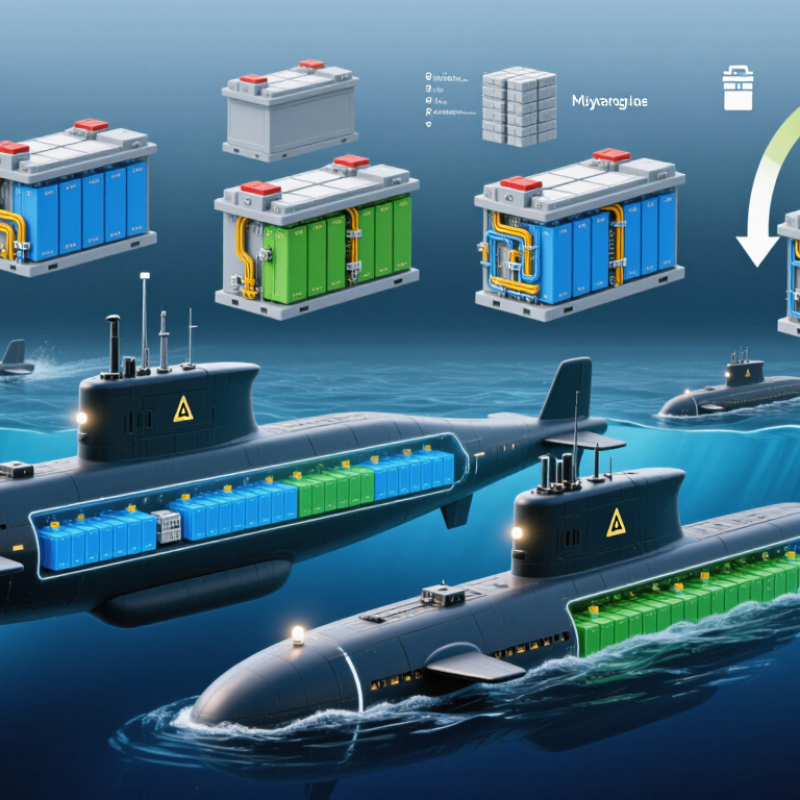
Submarine lithium-ion systems are engineered around the vessel’s mission, not a headline energy-density figure. Cells are grouped into monitored modules, while a battery-management system tracks voltage, temperature, current, and insulation resistance. In a sealed compartment, one fault can become a thermal, electrical, and pressure problem. Details matter.
Designers coordinate cell chemistry, module spacing, cooling paths, fire detection, gas handling, and isolation switches from the outset. The American Bureau of Shipping’s Guide for Use of Lithium-ion Batteries in the Marine and Offshore Industries describes safety and installation considerations; submarine integration still requires vessel-specific assessment. BloombergNEF reported that average lithium-ion battery pack prices fell 20% in 2024, to US$115 per kilowatt-hour. That is market context, not a submarine cost or performance benchmark: pressure-rated enclosures, redundancy, and qualification change the equation.
Usable energy at sea also depends on discharge rate, temperature, reserve policy, and ageing. A sound design review asks what happens when a sensor fails, cooling weakens, or a module must be isolated. High nominal capacity alone does not prove long endurance. That is an easy blind spot. Test fault isolation, thermal barriers, and maintenance access against realistic duty cycles, and record the assumptions behind each result.
A submarine lithium-ion system must deliver steady hotel loads and brief, high-power bursts without compromising safety or acoustic discretion. Its usable energy matters more than a headline capacity figure. Engineers should model the full mission profile, including propulsion demand, reserve power, ageing, and time spent at low charge. A quiet cooling loop and clear alarm thresholds matter. So do cell-level voltage and temperature monitoring, electrical isolation, and fault containment.
The International Energy Agency’s Global EV Outlook 2024 estimates that electric-car battery demand reached about 750 GWh in 2023. That scale shows how quickly battery production is expanding, but it does not prove suitability for submerged service. IEC 62619:2022 provides a useful industrial-battery safety baseline; it is not submarine qualification. Designs still need mission-specific checks for vibration, humidity, temperature shifts, pressure boundaries, and safe operation after a single-cell fault. Margins matter.
Pack comparisons should disclose usable energy, continuous and peak power, recharge time, cycle-life test conditions, and capacity retained at end of life. Heat rejection deserves particular scrutiny: a compact enclosure can make a small thermal problem harder to manage. Redundant sensors help, but they cannot replace validated shutdown logic or realistic abuse testing. One awkward point remains: greater energy density may reduce volume while leaving less room for cooling and separation. The best trade-off depends on the vessel’s operating pattern, not a brochure number.
Key Performance Requirement: Cell-Level Specific Energy by Lithium-Ion Chemistry
The bars show broad representative cell-level ranges in watt-hours per kilogram (Wh/kg), not submarine-qualified system figures. Higher specific energy can reduce battery mass for a given stored energy, while submarine system selection must also account for safety, power delivery, cycle life, thermal management, packaging, and qualification requirements. Actual values vary by cell design and operating conditions.
In 2026, the best submarine lithium-ion battery system depends on the vessel, not a single chemistry ranking. Lithium iron phosphate cells can offer strong thermal stability, but usually store less energy per unit of mass. Nickel-rich chemistries can provide greater energy density, with tighter demands on monitoring and thermal management. There is no easy winner. Designers weigh endurance, available hull volume, service life, and acceptable risk together.
Cell chemistry is only one part of the system. Cells are assembled into modules with sensors that track voltage and temperature. The battery management system detects imbalance and can isolate a fault. Cooling paths, electrical protection, vibration resistance, and maintainable connections matter too. Integration must fit the pressure-hull layout and account for charging, ventilation, and emergency procedures. A detail can look minor on a drawing, then become awkward to inspect aboard. Full-scale testing is essential; calculations alone cannot settle every integration question.
Comparing leading submarine lithium-ion systems in 2026 means looking beyond headline capacity. Start with usable energy, continuous and peak power, and the mass and volume required. Ask how performance changes across the expected temperature range and as the battery ages. Numbers need context. A system suited to a compact research vessel may not fit a larger platform or its operating profile.
Safety deserves equal attention. Examine cell-level monitoring, fault isolation, thermal management, and how the battery enclosure handles heat and moisture. Request independent test results, not just supplier summaries. Check whether the battery management system reports clear alarms and records faults for later review. That matters. A brief sensor failure can complicate diagnosis, and no system should be treated as maintenance-free.
Compare service life using stated test conditions, including charge cycles, storage periods, and depth of discharge. Review charging limits, inspection intervals, replacement procedures, and the availability of qualified technical support. Integration also counts: cable routing, cooling connections, and access for routine checks can affect the installation. Request evidence from comparable marine environments, while recognizing that one test cannot predict every vessel’s results. Some specifications remain hard to compare; document assumptions and unresolved questions before ranking options.
Best Submarine Lithium Ion Battery Systems in 2026?
Safety, Maintenance, and Operational Considerations
On a submarine, battery safety starts with the whole installation, not cell chemistry alone. Engineers should assess enclosure strength, seawater ingress paths, electrical isolation, heat removal, and gas detection together. A battery management system can flag abnormal voltage or temperature, but it cannot replace physical barriers and crew procedures. Small changes matter. Sensor locations should reflect real hot spots, including cable joints and modules near warm equipment.
Maintenance should follow system limits and the vessel’s approved inspection schedule. Routine records can reveal rising cell imbalance, reduced capacity, insulation faults, or repeated cooling alarms before they become urgent. Technicians should inspect connectors for discoloration, verify seals, and test protective functions using documented methods. Do not treat a normal display as proof of health. That is not enough. Swelling, unusual odors, excess heat, or unexplained voltage drift warrant controlled isolation and technical review.
Operational planning matters as much as upkeep. Charging limits, ventilation, compartment access, and emergency response need clear roles during watch handovers. Crews should know which alarms require load reduction, isolation, or evacuation, and rehearse those actions under realistic conditions. Actual performance varies with chemistry, layout, age, and duty cycle; a checklist can miss that nuance. Even well-managed systems retain uncertainty, so trend data and honest incident reporting deserve regular review.
| Battery chemistry or system approach | Operational strengths | Key limitations | Safety considerations | Maintenance and monitoring | General suitability |
|---|---|---|---|---|---|
| Lithium iron phosphate (LFP) | Typically offers good cycle life and a comparatively stable thermal profile; can support high charge and discharge rates when the cell design permits. | Generally has lower cell-level energy density than many nickel-rich lithium-ion chemistries, so a system may need more volume or mass for the same stored energy. | LFP is not immune to overheating, internal faults, or fire. Cell-level protection, thermal management, fault isolation, and validated containment remain necessary. | Use continuous voltage and temperature monitoring, battery-management-system diagnostics, insulation checks, and scheduled inspection of connections and cooling equipment. | A potential choice where safety margins and cycle life are prioritized and available space and mass allow for lower energy density. |
| Nickel-manganese-cobalt (NMC) | Can provide relatively high energy density, which may help meet energy-storage requirements within constrained mass or volume. | Performance, life, and safety characteristics depend on cell formulation, operating limits, and system design; thermal management and protection are critical. | Compared with LFP, many NMC designs require particularly careful control of temperature, charging, and fault propagation. Thermal runaway risk cannot be eliminated by chemistry alone. | Monitor cell-level voltage and temperature, current, insulation, and cooling-system performance. Establish inspection and replacement criteria using validated data. | May suit applications with stringent energy-density targets, provided the full battery installation meets rigorous safety and qualification requirements. |
| Lithium titanate (LTO) | Often supports high power capability, rapid charging, and long cycle life, depending on cell design and operating conditions. | Typically has lower energy density and higher cost per unit of stored energy than common LFP or NMC options. | A comparatively robust cell chemistry still requires system-level safeguards against electrical faults, overheating, and damage. | Apply battery-management-system monitoring and routine checks of interconnects, insulation, sensors, and thermal-control equipment; verify service limits against the selected cell specifications. | May be considered where power delivery, frequent cycling, or rapid charging is more important than maximizing stored energy per unit of mass or volume. |
| Modular, fault-isolated battery architecture | Can make faults easier to detect and contain by dividing the battery into monitored sections with appropriate electrical isolation. | Adds sensors, switching devices, controls, and integration complexity; actual benefits depend on system design and validation. | Design should address fault propagation, emergency disconnection, thermal events, ventilation or gas management, and safe operation after a detected fault. | Requires testing of alarms, isolation devices, monitoring channels, software, and backup power for protection functions. Maintain documented procedures for abnormal conditions. | A system-level feature to evaluate with any chemistry; modularity alone does not establish safety or suitability. |
| Submarine-specific integration and qualification | Addresses the complete installation, including electrical distribution, cooling, monitoring, enclosure design, and operating procedures. | Requires extensive engineering, testing, and platform-specific approval; commercial cell specifications alone do not demonstrate submarine suitability. | Evaluate hazards including thermal runaway, toxic or flammable gases, short circuits, water ingress, shock, vibration, and loss of cooling. Provide detection, containment, isolation, and emergency-response measures as appropriate to the design. | Use condition-based monitoring alongside planned inspections, software and sensor verification, maintenance records, and trained personnel. Define safe charging, shutdown, and fault-response procedures. | Essential evaluation criterion for any candidate system. Selection should follow platform requirements, independent safety assessment, and applicable naval qualification processes. |
Note: There is no universally “best” submarine lithium-ion battery chemistry. Suitability depends on platform requirements, system integration, qualification results, and the operator’s safety case.
Usable energy depends on mission demands, temperature, discharge rate, ageing, and reserve policy. A large capacity figure can mislead.
It tracks cell voltage, temperature, current, and insulation resistance. It can flag imbalance and help isolate a faulty module.
There is no universal winner. Lithium iron phosphate can offer strong thermal stability, while nickel-rich cells may provide greater energy density.
Compact spaces can trap heat and leave little room between modules. Quiet cooling paths and clear alarm thresholds matter.
They should test fault isolation, thermal barriers, shutdown logic, and performance across realistic mission cycles. Calculations alone are not enough.
A fault can create electrical, thermal, and pressure concerns. Detection and containment should be checked at module and system levels.
Compare usable energy, continuous and peak power, recharge time, ageing, and end-of-life capacity. Test conditions should be stated clearly.
Technicians need practical access to inspect sensors, connections, and modules. A layout that looks tidy on paper may be awkward aboard.
Not necessarily. It may reduce battery volume while leaving less room for cooling and separation. One estimate may still be too neat.
This article examines the principles behind Submarine Lithium-Ion Battery Systems and the design choices that shape their performance in demanding underwater environments. It outlines key requirements such as energy capacity, power delivery, efficiency, service life, and dependable operation. It also explains how battery chemistry and modular construction influence system performance, and how batteries must be integrated with a submarine’s electrical, thermal-management, and monitoring systems.
Rather than naming a single best solution, the article offers a practical framework for comparing systems in 2026. Readers can assess designs by considering performance, integration needs, safety features, maintenance requirements, and suitability for intended operating conditions. The discussion also highlights the importance of careful monitoring, thermal control, inspection, and established operating procedures throughout a system’s service life.