Lithium-Ion Battery & BMS Insights Blog

Expert articles, engineering updates, and technical insights on custom lithium battery packs and battery management systems.

0%

China has become a major manufacturing base for Lithium-Ion Pouch Cells, supporting electric vehicles, energy storage, and portable electronics. Its leading producers compete through energy density, cycle life, thermal control, and production consistency.

This introduction examines China’s top ten Lithium-Ion Pouch Cells manufacturers. It considers their technologies, production scale, quality systems, and market applications. The selection should not be treated as a permanent ranking. Capacity changes. New factories open. Some performance claims also require independent verification.

Pouch cells use lightweight aluminum laminate packaging. This design can save space and reduce weight. However, swelling control, sealing quality, and mechanical protection remain important engineering concerns. Small process differences may affect long-term reliability.

John B. Goodenough, a pioneer in rechargeable battery research, said, “The battery is the most important component in an electric vehicle.” That observation still matters. A cell manufacturer is not judged only by laboratory capacity. It must deliver stable cells across thousands of production batches.

The companies discussed here are evaluated through practical indicators. These include cell chemistry, manufacturing experience, safety testing, customer sectors, certifications, and after-sales support. Public information can be incomplete. That limitation deserves attention.

Readers should compare technical documents carefully. A higher capacity figure does not always mean better field performance. Temperature, charging speed, packaging space, and operating conditions can change the result. The strongest supplier may depend on the application, not reputation alone.

This overview aims to provide a balanced starting point for buyers, engineers, and industry researchers. Some conclusions may need revision as battery technology develops.
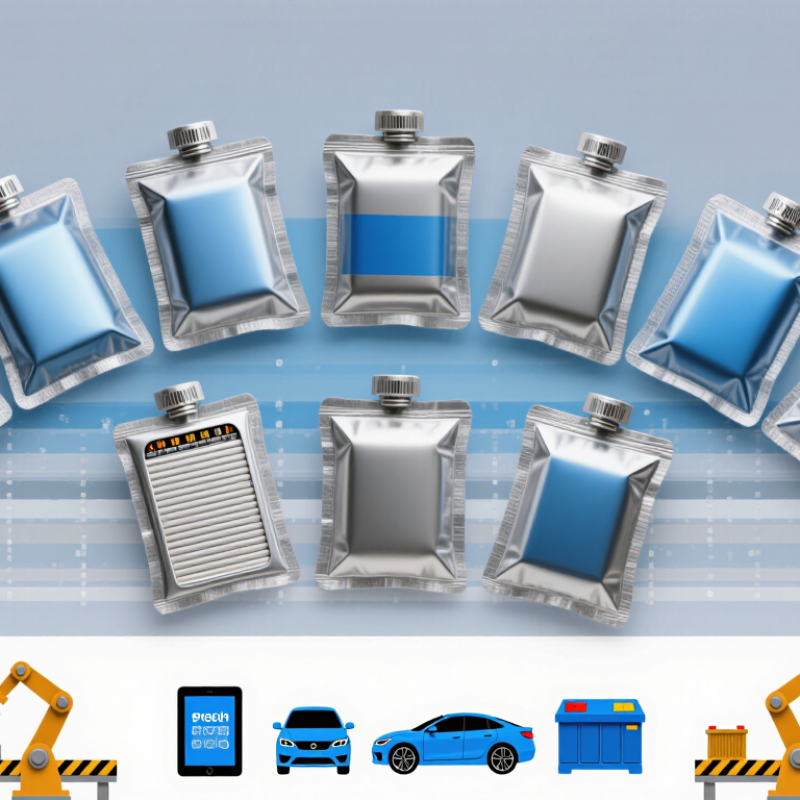
China Top 10 Lithium Ion Pouch Cell Manufacturers

Ranking China’s Top 10 Pouch Cell Makers by GWh, Yield, and Certification

China’s top 10 lithium-ion pouch cell manufacturers should be ranked by more than factory size. This assessment weighs annual shipped capacity, production yield, and verified certifications. GWh shows market reach, while yield reveals process discipline. A large plant can still produce costly defects.

The leading group typically reports multi-GWh output and stable orders from electric mobility, energy storage, and industrial customers. The strongest performers often maintain yields above 90%, although figures differ by cell chemistry and production stage. Certification evidence should include ISO 9001, IATF 16949, UN 38.3, and relevant IEC or UL testing. These documents must match the actual facility, not only the corporate office. Some public figures remain self-reported, so independent audits deserve greater weight. No ranking is perfect.

Tips: Ask for three years of shipment data, not one impressive estimate. Check first-pass yield, warranty claims, and batch traceability. Request sample cells from regular production. Inspect pouch sealing, tab alignment, swelling control, and capacity consistency. A polished sample may hide ordinary factory performance. Also compare certification scope, test dates, and product models. Certification alone does not prove long cycle life. A supplier with slightly lower GWh may offer better reliability and technical support. That trade-off matters.

Comparing LFP and NMC Cells: 160–330 Wh/kg and 2,000–6,000 Cycles

China’s lithium-ion pouch cell sector offers two dominant chemistries: LFP and NMC. Their practical differences become clearer through energy density and cycle life. LFP cells commonly deliver around 160–210 Wh/kg, while NMC cells may reach 220–330 Wh/kg. That extra energy can reduce pack size in electric vehicles and portable equipment. It also increases thermal management demands.

LFP usually provides about 3,000–6,000 cycles under controlled conditions. NMC often reaches roughly 2,000–4,000 cycles, depending on design and operating limits. A cycle rating is not a promise. Testing may use moderate temperatures, shallow discharge, and carefully controlled charging. Real users may face winter storage, rapid charging, or continuous high loads. Small details matter.

In supplier evaluations, engineers should request full test conditions, not only headline figures. Check cell capacity, swelling behavior, internal resistance, and performance after repeated cycling. A 280 Wh/kg NMC pouch cell may look superior, but its usable energy can fall when the battery management system protects longevity. LFP is heavier, yet it may perform steadily in demanding fleet applications. The comparison is not perfectly clean. Some published data also appears optimistic. Independent testing remains necessary before approving a production batch.

Assessing Manufacturing Scale: Gigafactories, Automation, and 2024 Output

China’s top ten lithium-ion pouch cell manufacturers should be assessed beyond factory size. In 2024, leading producers operated large-scale plants with annual capacity measured in gigawatt-hours. However, nameplate capacity did not always equal actual output. Public figures often mixed planned capacity, installed equipment, and shipped cells.

Gigafactories used automated film forming, electrode coating, stacking, sealing, electrolyte filling, and formation testing. High-speed stacking lines reduced manual variation, while machine vision inspected tabs, wrinkles, and seal quality. Digital traceability linked each pouch to production data, temperature records, and test results. Strong facilities also controlled moisture carefully. This matters because pouch cells use sensitive laminated packaging. Still, automation alone cannot prove reliability. Yield rates, equipment utilization, warranty data, and consistent 2024 shipments deserve equal attention.

Tips: Compare actual quarterly output with announced capacity. Check whether figures cover cells only or complete battery systems. Ask for yield data, aging duration, testing standards, and production-site evidence. Be cautious with impressive factory photographs; they may show expansion rather than stable production. A smaller site can perform better when its processes are mature. That point is easy to miss.

Mapping Applications: EVs, ESS, Consumer Devices, and 800–1,000 V Systems

China Top 10 Lithium Ion Pouch Cell Manufacturers: Mapping Applications

Pouch cells are moving beyond consumer electronics. The International Energy Agency reported over 14 million electric cars sold globally in 2023, with China contributing more than half. This growth increases demand for lightweight, high-energy cells. Leading Chinese manufacturers now target passenger EVs, electric buses, and commercial vehicles. Pouch formats can use space efficiently. They also require disciplined sealing and thermal management.

Energy storage creates a different test. The IEA’s Batteries and Secure Energy Transitions report estimated global battery demand near 750 GWh for EVs in 2023. Stationary systems need long cycle life, stable operation, and predictable maintenance. Cell suppliers therefore adjust chemistry, module design, and safety controls for grid storage. A pouch cell may perform well in an EV, yet need redesign for a container operating through hot summers. That detail is easy to overlook.

High-voltage platforms are becoming more visible. Systems operating from 800 to 1,000 volts can reduce current during fast charging and limit cable losses. However, insulation, arc protection, cooling, and battery-management accuracy become stricter. The U.S. Department of Energy highlights these engineering trade-offs in its vehicle electrification research. Consumer devices still prioritize thinness and energy density. ESS prioritizes endurance. EVs demand both.

A ranking is never perfectly clean. Public data often mixes cell capacity with shipment volume. Reported figures also vary by chemistry and application. Buyers should compare verified cycle tests, safety records, production consistency, and field evidence, not only factory scale.

Verifying Quality and Safety: UN 38.3, IEC 62660, and Thermal Tests

For China’s top lithium-ion pouch cell manufacturers, verification begins with evidence, not impressive capacity figures. The IEA Global EV Outlook 2024 reports that electric vehicle battery demand reached about 750 GWh in 2023, rising roughly 40% year on year. Such scale makes test discipline essential.

UN 38.3 covers transport hazards, including altitude simulation, vibration, shock, external short circuit, and forced discharge. It confirms shipping safety for a tested cell design. It does not prove long-term field reliability. IEC 62660 adds deeper traction-cell evaluation. Part 1 examines capacity and energy performance, while Part 2 addresses reliability and abuse behavior. Part 3 focuses on safety requirements. Ask for complete reports, sample identification, test dates, and laboratory accreditation.

Thermal evidence needs close inspection. A pouch cell should face controlled heating, temperature cycling, overcharge, external short circuit, and nail or crush abuse where applicable. Test records should show temperature curves, venting, fire, pressure, and propagation results. Small details matter, especially tab sealing and electrolyte leakage after cycling. I have seen impressive summaries hide unclear failure criteria. That is a warning.

A practical audit also compares test data with production controls. Check formation records, weld resistance, separator specifications, and inspection sampling. Thermal runaway cannot be judged from one successful sample. Repeatability matters. So does honest disclosure. A supplier that reports a failed test, its cause, and corrective action may demonstrate stronger engineering maturity than one showing only perfect charts.

FAQS

How should pouch cell manufacturers be compared?

Compare annual shipments, production yield, certifications, and field reliability. Factory size alone can mislead. No ranking is perfect.

Why does production yield matter?

Yield shows how consistently a factory produces acceptable cells. A large plant may still create costly defects. Check first-pass yield and warranty claims.

What shipment information should buyers request?

Ask for three years of shipment data, not one impressive estimate. Compare cell capacity with actual shipment volume. Figures can be mixed.

Which certifications and tests deserve attention?

Request ISO 9001, IATF 16949, UN 38.3, and relevant IEC or UL reports. Confirm the documents match the actual production facility.

What does UN 38.3 prove?

UN 38.3 evaluates transport hazards, including vibration, shock, altitude, and external short circuits. It confirms tested shipping safety. It does not prove long-term reliability.

What does IEC 62660 add?

IEC 62660 examines traction-cell capacity, energy, reliability, and safety. Request complete reports, sample identification, test dates, and laboratory accreditation.

How should thermal safety evidence be reviewed?

Check controlled heating, temperature cycling, overcharge, and mechanical abuse results. Review temperature curves, venting, fire, pressure, and propagation data. Details matter.

Should one sample cell decide supplier selection?

No. Request samples from regular production and compare sealing, tab alignment, swelling, and capacity consistency. A polished sample may hide ordinary performance.

Do different applications require different pouch cells?

Yes. Electric vehicles need energy and power. Energy storage needs endurance and stable maintenance. Consumer devices prioritize thinness and energy density.

What should buyers inspect during a factory audit?

Review formation records, weld resistance, separator specifications, sampling methods, and batch traceability. Compare production controls with test results. I might still miss something.

Conclusion

This article presents a structured overview of China’s top 10 Lithium-Ion Pouch Cells manufacturers, comparing their production capacity, estimated GWh output, manufacturing yield, automation level, and certification coverage. It examines how leading producers develop both LFP and NMC pouch cells, with energy densities generally ranging from 160 to 330 Wh/kg and cycle lives of approximately 2,000 to 6,000 cycles, depending on chemistry, operating conditions, and design.

The analysis also explores gigafactory expansion, 2024 production performance, and the use of advanced quality-control systems. Applications are mapped across electric vehicles, energy storage systems, consumer electronics, and high-voltage platforms operating at 800–1,000 V. Finally, the article explains how buyers can assess reliability through UN 38.3 and IEC 62660 compliance, thermal abuse testing, safety validation, consistency, and long-term performance rather than relying solely on nominal capacity or factory scale.

Elara

Elara

Elara is a dedicated marketing professional who combines strategic insight, clear communication, and a deep understanding of the company’s products. With a strong ability to translate complex features into practical value, Elara helps customers and industry professionals better understand how......