Expert articles, engineering updates, and technical insights on custom lithium battery packs and battery management systems.
Choosing Lithium Iron Phosphate Battery Packs starts with the job the battery must do. A cabin backup system, a delivery van, and a solar installation place very different demands on a pack. The chemistry is valued for its stable operation and long cycle life, but those qualities do not make every product suitable for every setup. Small details matter.
Begin with the system’s voltage, the energy needed between charges, and the highest expected load. A label showing amp-hours alone may not tell the full story. Check usable energy, continuous discharge limits, charging requirements, and whether the built-in battery management system suits the intended equipment. For example, a pack that appears adequate on paper may struggle when an inverter starts a motor or when winter temperatures slow charging.
Next, consider the enclosure, wiring, mounting space, and expected operating environment. Ask the supplier for a clear datasheet, test information, warranty terms, and guidance on installation and maintenance. Reputable specifications should explain limits, not hide them. That matters.
There is no universal “best” pack. A larger capacity can add cost and weight without solving a poorly estimated load. Likewise, a familiar brand name is not a substitute for checking model-specific performance. Compare options against actual usage, and leave room to question assumptions. Battery selection involves trade-offs; careful verification is more useful than a confident guess.
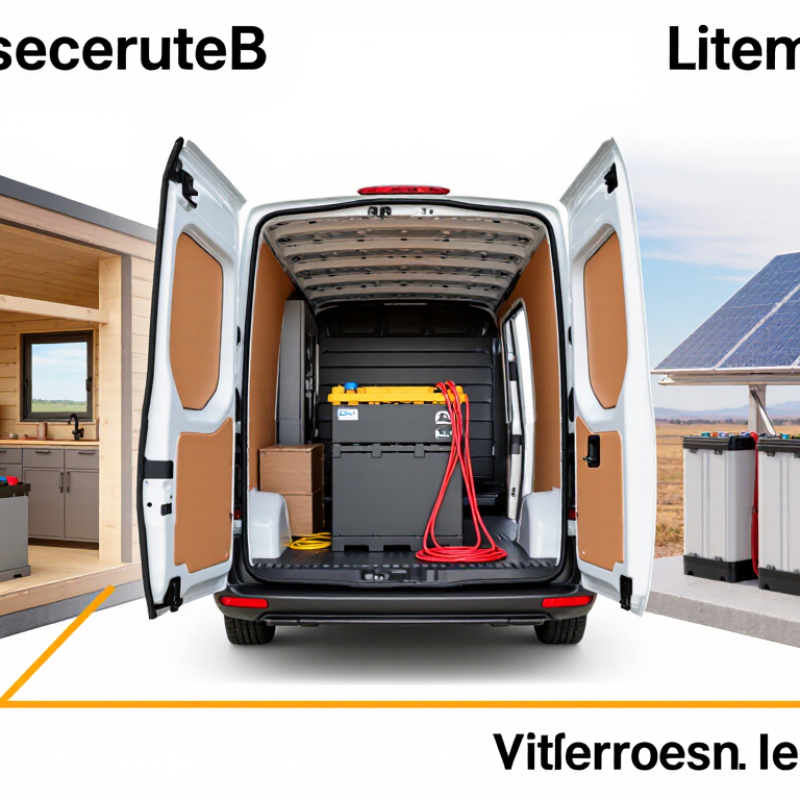
How to Choose Lithium Iron Phosphate Battery Packs? Start by identifying the application: a cabin, backup system, or mobile setup each has different demands. List every load, its running watts, startup surge, and daily operating hours. A 500-watt load used for six hours needs 3 kWh before conversion losses. Check the inverter’s continuous and surge ratings, too. A refrigerator may draw modest power while running, then briefly demand much more when its compressor starts.
Backup time depends on the load profile, not just the battery’s headline capacity. Sketch a typical day, including when devices run together. Then estimate energy needed during an outage and allow for inverter losses, temperature, and capacity decline over time. NREL’s 2024 Annual Technology Baseline models utility-scale lithium-ion storage with a four-hour duration; that is a modeling assumption, not a fit for every home or application. Real loads can be uneven. A tidy estimate may still miss a cold night or an unexpected pump cycle.
Tips: Measure important loads with a plug-in meter where practical. For example, if a 3 kWh load must run for six hours, confirm that the pack can deliver that usable energy after losses and reserve margins. Keep essential circuits separate from nonessential ones. Record actual runtime after installation, then adjust your estimate. That part is often overlooked.
A lithium iron phosphate cell is commonly rated at 3.2 V nominal. Multiply 3.2 V by the number of cells in series to estimate pack voltage. A 16-cell series pack is therefore 51.2 V nominal. Parallel strings increase amp-hour capacity, not voltage. For example, one 16S, 100 Ah string stores about 5.12 kWh nominally: 51.2 V × 100 Ah.
Nominal energy is not all usable. At 80% depth of discharge, that pack provides about 4.10 kWh before inverter losses and reserve allowances. Size the pack from the energy your loads need: a 1 kW load running four hours requires 4 kWh delivered, so a 5.12 kWh pack may be tight. Leave room for cold conditions, aging, and unexpected demand. Small details matter.
NREL’s 2024 Annual Technology Baseline uses 85% round-trip efficiency for utility-scale battery storage; this is a system-level benchmark, not a guarantee for an individual pack. Account for conversion losses separately from depth of discharge. I still prefer a modest reserve over a perfect spreadsheet estimate. Real loads rarely behave perfectly.
When comparing lithium iron phosphate battery packs, cycle life is a useful starting point. Many LFP packs are rated for 2,000–5,000 or more cycles, but the number alone can mislead. Check how the manufacturer defines a cycle and what capacity remains at the end of testing. Some ratings assume the pack retains about 80% of its original capacity; others may use different conditions. Read the test details. Charge depth, temperature, and charging speed all affect results. Small print matters.
Think about how the pack will be used. A cabin system that runs gently each day may age differently from a pack regularly drained deeply in a hot equipment bay. For example, frequent full discharges can put more strain on cells than shallower use, though actual performance depends on the pack’s design and controls. Heat matters. Ask whether the cycle rating comes from controlled laboratory testing, and whether it reflects the intended operating range. A higher rating can be valuable, but it does not guarantee longer service in every setup. Real use varies. I would also compare warranty terms and capacity limits; cycle figures are easy to notice, while those details are easier to overlook.
These are illustrative rating benchmarks, not a survey of all battery packs. Compare cycle-life claims under the same test conditions, including depth of discharge, temperature, charge and discharge rate, and end-of-life capacity threshold.
Match Pack Voltage, BMS Limits, and 3.65 V Maximum Cell-Charge Voltage
Start with the equipment’s required voltage, then choose a pack with the correct number of cells in series. A lithium iron phosphate cell is commonly rated around 3.2 V nominally, but its full-charge limit is often 3.65 V. Check the cell specifications. Do not assume every cell has identical limits. For a 4-series pack, for example, 3.65 V per cell gives a 14.6 V maximum charging voltage. The charger must suit that pack configuration and follow the cell maker’s guidance. Small details matter.
Next, compare the BMS limits with the real load. Its continuous discharge rating should cover the device’s sustained current, while its peak rating should handle brief startup surges. Check charge-current limits too. A BMS is a protective backstop, not a substitute for a properly set charger. It may disconnect the pack if a cell exceeds its voltage limit, but repeated cutoffs are a warning that settings or charging behavior need review. Leave some practical margin rather than sizing everything to the stated maximum. Also confirm low-temperature charging restrictions and balancing behavior. These can be easy to overlook. A compact label showing series count, charge voltage, and current limits can prevent costly guesswork during installation.
When choosing a lithium iron phosphate battery pack, check its temperature limits against the place it will operate. A garage, outdoor cabinet, or vehicle can experience very different conditions. Review separate charging and discharging ranges; they are not always identical. Charging below the specified minimum can damage cells, so confirm whether the pack includes temperature-based charge protection. Small details matter.
Certifications provide useful evidence, but check the exact model and what the certificate covers. A document for a cell may not apply to the complete pack, its wiring, or its battery management system. Ask for the certificate number and issuing laboratory, then verify the scope with the source when possible. Also request test conditions from the manufacturer. Capacity results depend on factors such as ambient temperature, charge rate, discharge current, and cutoff voltage. Cycle-life figures need context too: depth of discharge and test procedure can change the result. A number without these details is hard to compare.
Tips: Ask for the latest test report, the tested sample configuration, and any temperature-control limits. Compare those conditions with your expected use, not just the headline capacity. If the supplier cannot clarify a test, treat that uncertainty as part of the decision. Real installations rarely match laboratory conditions exactly.
| Selection factor | What to check | Useful reference or test detail | Questions for the manufacturer |
|---|---|---|---|
| Charging temperature | Confirm the permitted cell and pack charging range, including any low-temperature charge cutoff. | Many LFP cells specify charging only at temperatures above 0°C; the exact upper and lower limits depend on the cell and pack design. Charging below the specified minimum can cause lithium plating and damage. | Does the battery management system (BMS) stop charging outside the allowed range? Is low-temperature charging enabled only with a heater? |
| Discharging temperature | Check the specified operating range under the intended load, not just the storage range. | A common LFP cell specification allows discharge at sub-zero temperatures, sometimes down to about −20°C, and up to around 60°C. These are examples, not universal limits; usable power and capacity can fall in cold conditions. | Are continuous and peak discharge limits reduced at low or high temperatures? Where are pack temperatures measured? |
| Storage temperature | Separate storage limits from charging and discharging limits; check the recommended state of charge for storage. | Storage limits vary by product and duration. Long-term storage guidance commonly specifies a moderate state of charge and periodic inspection; follow the pack-specific manual rather than assuming operating limits apply. | What state of charge and inspection interval are recommended for storage? Are condensation and humidity limits stated? |
| Capacity and test conditions | Compare rated capacity only when discharge rate, temperature, voltage limits, and rest periods are comparable. | A capacity result should state the test temperature, charge procedure, discharge current or C-rate, and cutoff voltage. A result at one condition may not represent capacity at a higher load or colder temperature. | Can you provide a capacity test report for the exact pack configuration, including the test instrument and acceptance tolerance? |
| Cycle-life claim | Check the definition of one cycle, depth of discharge, temperature, charge/discharge rate, and end-of-life capacity threshold. | Cycle life is condition-dependent. A stated cycle count is meaningful only when its test protocol and retained-capacity criterion—often expressed as a percentage of initial capacity—are disclosed. | Was the claim measured on cells or complete packs? Is it based on test data or an estimate? |
| Transport compliance | For lithium battery transport, request evidence that the applicable UN 38.3 requirements have been met for the shipped battery type. | UN Manual of Tests and Criteria, subsection 38.3, covers transport-related tests. Request the test summary and confirm that it matches the battery model and configuration being shipped. | Can you provide the UN 38.3 test summary and confirm the tested model matches this pack? |
| Product safety standards | Select standards according to application and market; distinguish a tested or certified battery from a complete system approval. | IEC 62619 addresses safety requirements for industrial secondary lithium cells and batteries. UL 1973 applies to stationary and other specified battery applications. UL 9540 is a system-level energy storage safety standard; it is not interchangeable with a cell or battery certification. | Which exact standard and edition apply? Does the evidence cover the complete pack, its intended use, and the target market? |
| BMS and protection | Verify cell-level voltage and temperature monitoring, overcurrent protection, and documented fault responses. | Protection thresholds and response times are pack-specific. The BMS should be matched to the cell configuration, permitted current, temperature limits, and charger. | What conditions trigger charge or discharge shutdown, and how does the pack recover after a protection event? |
| Documentation and traceability | Review the datasheet, manual, warranty, safety data, test reports, and model identification. | Test evidence should identify the tested model and configuration, test conditions, date, and issuing laboratory where applicable. Ensure documentation corresponds to the delivered product. | Will any cell, BMS, or pack design change affect the supplied test evidence or warranty? |
Note: Temperature ranges and performance figures are product-specific examples, not universal guarantees. Confirm all limits and certifications against the current datasheet, test reports, and applicable local requirements.
Identify the application, such as a cabin, backup system, or mobile setup. List each load, its running watts, startup surge, and daily operating hours.
Multiply watts by operating hours. A 500-watt load running for six hours uses 3 kWh before conversion losses.
Some appliances briefly need more power when starting. Check the inverter’s continuous and surge ratings, especially for equipment with a compressor or motor.
Map which devices run together and how long they operate. Include inverter losses, temperature, and capacity decline. Estimates can still miss an unexpected pump cycle.
Yes, where practical. A plug-in meter can help check important devices. Record runtime after installation, then revise your estimate.
Check separate charging and discharging limits against the installation location. A garage, outdoor cabinet, and vehicle may experience different conditions.
Confirm the certificate covers the exact battery pack, not only its cells. Check its number, issuing laboratory, and scope.
Request test conditions, including temperature, charge rate, discharge current, cutoff voltage, and depth of discharge. A headline number alone tells little.
Choosing Lithium Iron Phosphate Battery Packs starts with understanding the equipment they will power, its typical and peak loads, and how long backup power must last. These details help determine the required voltage and capacity. Since LFP cells have a nominal voltage of about 3.2 V, calculate pack capacity from the energy demand while allowing for the usable depth of discharge, rather than assuming the full rated capacity will always be available.
Next, compare cycle-life ratings, noting that many packs are rated for roughly 2,000–5,000 or more cycles, and check the conditions behind those figures. Confirm that the pack voltage and Battery Management System limits suit the application, including the maximum cell-charge voltage of 3.65 V. Finally, review the permitted operating-temperature range, relevant certifications, and manufacturer test conditions. A careful comparison of these factors can help you select a pack that fits both your power needs and expected operating environment.